How to prepare the next generation of risk managers

The risk management industry is changing. The skills and knowledge required for new risk managers entering the field is changing rapidly, and new developments in technology and the impact of geopolitical uncertainty across the globe are putting pressure on new starters like never before.
Professor John Hull is Co-Director of the Master of Financial Risk Management (MFRM) program at the Rotman School of Management, part of the University of Toronto. He sat down with a few current students to see how the program is giving them the skills to tackle risk management challenges as they set out into their career following graduation.
Meet the students
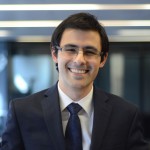 Adam Albogatchiev (AA)
Bachelor degree: Mathematics and Finance
Work experience: Market Data Services Summer Intern, TD Securities, Global Risk Management, Retail Credit Risk Summer Associate, Scotiabank
MFRM project: Bank of Canada
 Joanna Leung (JL)
Bachelor degree: Financial Economics
Work experience: Research & Analysis Intern, Ontario Securities Commission, Bilingual Financial Services Representative, CI Investments
MFRM project: McKinsey
 Dildar Ghotra (DG)
Bachelor degree: Mechanical Engineering, MBA in Finance
Work experience: Manager, Investment Banking, SBI Capital Markets
MFRM project: Ontario Teachers’ Pension Plan
..
Why did you choose the MFRM program at Rotman?
DG –During my time at SBI Capital Markets Ltd, I have had the experience of working on both qualitative and quantitative projects. I realized that I am good at quantitative finance and have a natural affinity for it. Therefore, I wanted to move to a quantitative finance role. I started looking for potential master programs in this area. I had already completed my Financial Risk Management designation from GARP and wanted to get a practical perspective on risk management with the masters.
JL – During my undergraduate degree I learned a lot about economic theory. After this I wanted to do something more tangible. Following the financial crisis, I saw there was growing demand for risk management professionals. Through two different intern positions I learned about the mutual funds industry, from the perspective of a dealership and also from the regulatory side. I became interested in how you manage risk.
AA – The program at Rotman was attractive to me as the professors are very prestigious names in the field. I was also attracted to the fact it is a top business school. I knew they would have the connections to industry to help me land a job after graduating, and that they would be able to give me the polish I needed from the business perspective.
How have you found the program so far? What are your highlights?
AA – I like the materials being taught. It is a lot of hard work, with multiple projects at any given time, but it is rewarding too. I’ve enjoyed the probability modelling course the most. Going into the finance lab, dealing with practical, real-world problems is a lot of fun.
JL – The program has been intense, however it is providing a holistic perspective of risk management. I’ve enjoyed the combination of academic learning and the careers-focus so far. It has exceeded my expectations in terms of the resources offered at Rotman; you’re not just in a school, it’s a bridge to industry. I recently attended part of a machine learning conference on campus and talked to some business founders. It was great to see the application of some of the things I’m learning.
DG – I’ve learned a lot of things during the program; the financial concepts, the practical skills (programming skills like Matlab and VBA) and hands-on trading experience in the finance lab. In addition, I am also improving my soft skills and presentation skills. Since the class profile is very diverse, I have an opportunity to learn from my classmates.
What are you looking forward to and where you would like to work after graduating?
DG – I’m particularly looking forward to the project [with Ontario Teachers’ Pension Plan]. It’s a quantitative project at an asset management firm, which is consistent with my background and future aspirations. In terms of the career, I’m still exploring different areas, however, at the moment I feel I want to get into asset management. It suits my background in investment banking, I feel there are similarities so there is knowledge I could transfer over.
JL – I’m really looking forward to my industry project with McKinsey. The project will consist of developing a product that would enable their teams and potentially their clients to gain insight into global and local trends on risk and compliance, in collaboration with McKinsey experts in Boston, New York, London, and Vancouver. I feel analytics is gaining a lot of attention in the industry. I would like to work in consulting, which is why my project is really relevant. I feel the applicable programming skills would be relevant to many fields, especially going forward.
AA – I know that I’d like to work in a quantitative area, however I don’t want to limit myself right now. There are a lot of options to work on the quantitative side so I’m going to be exploring more about those during the rest of the program. I’m really looking forward to my project with the Bank of Canada.
Meet the future risk rising stars
Find out about hiring our students by contacting us at MFRMCareers@rotman.utoronto.ca. Our MFRM resume book profiles all students from our Class of 2018.
About the program
The MFRM is an 8-month, full-time program which develops graduates who understand different types of risk, recognize the causes and effects of risk and the regulatory framework of financial institutions. Graduates have a deep knowledge of the models and tools used to develop risk-informed decisions and forecasts. Importantly, they understand the business impact of risk and are able to identify and communicate relevant information effectively to non-specialists.
During the program, students spend two months tackling a real business issue that is relevant for various industries. These project placements take students out of the classroom and into industry, allowing them to work in-house with practicing risk management professionals.
Launched in 2016, the program attracts a diverse set of students from Canada and across the globe.