US-Chinese rivalry and the future of global private capital allocations
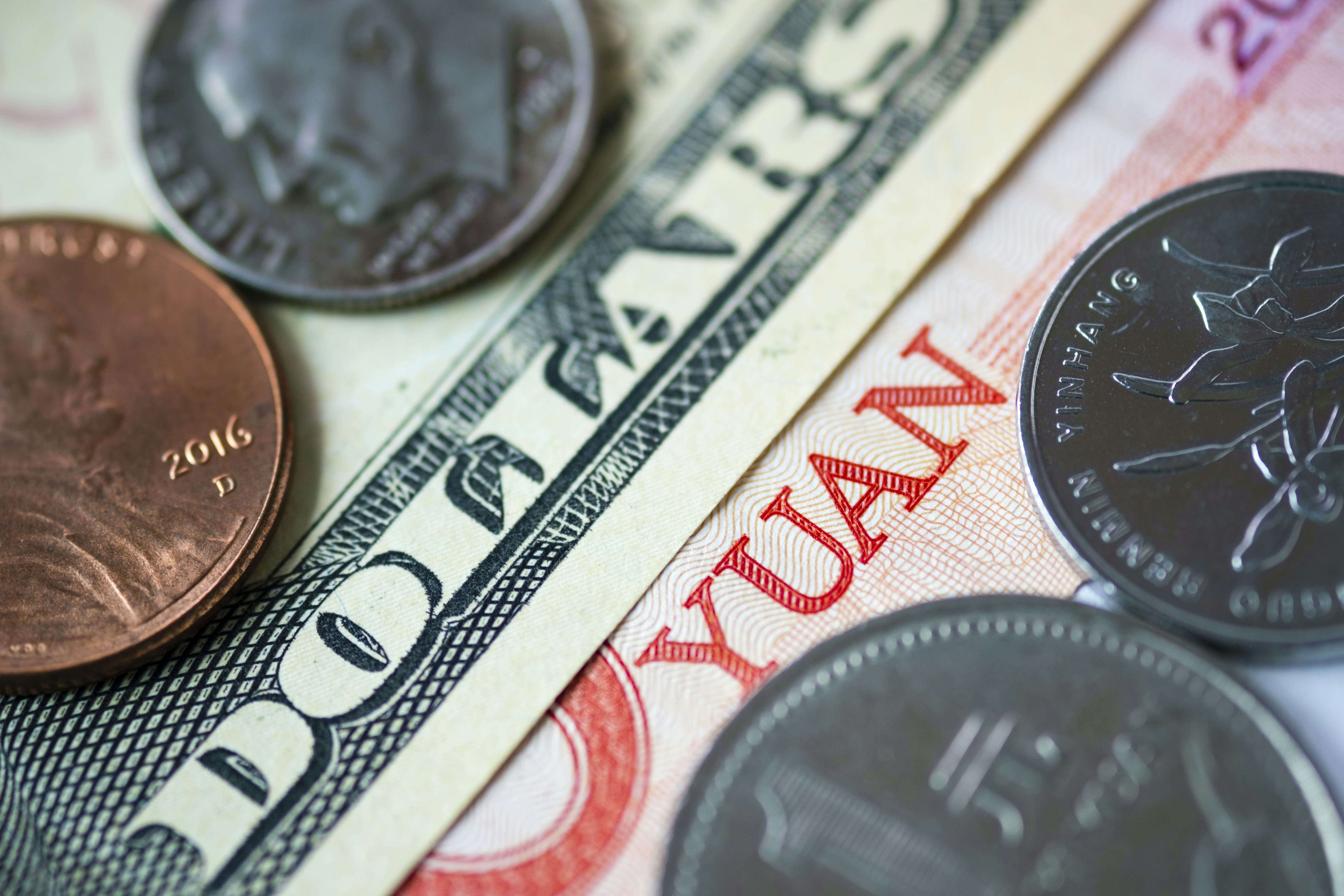
 We hear from Ziad Sarkis, Director of Research for the Wharton School’s Harris Alternative Investments Program at the University of Pennsylvania, on how current geopolitical events involving NATO, Russia, and Ukraine are reshaping international relations and impacting the future of private capital allocations worldwide. Some of Ziad’s insights in this article are based on his interactions with global institutional investors as of March 15, 2022.
Irreversible momentum
On February 24, 2022, as the news of the invasion of Ukraine started trickling in, and while the world was trying to understand the military, political, and humanitarian implications of the unfolding events, institutional investors and alternative investment managers were working to understand the impact of the crisis on their investments and platforms. The first order of the day was to understand the exact exposure to Russian assets and mitigate the impending risks. The second priority was to assess the impact of having Russian investors directly or indirectly as limited partners or co-investors. However, as the crisis widened and entered its third week, it was clear that risks were far beyond the limits of Russian assets or sanction-prone investors.
While no one knows exactly how or when this crisis will end, discerning analysts, irrespective of personal sympathies for one side or the other, understand that this conflict will reshape more than just Russia’s economy or Ukraine’s territorial integrity.
Crossing the Rubicon
The alternative investments industry had its first growth in the late 70s and throughout the 80s, primarily in the U.S. on the back of a growing leveraged buyout industry benefiting from innovative deal structures utilizing generously available debt instruments. However, the real growth in this industry took off in the 90s in a post-cold war environment where globalization, outsourcing, technological innovations, and a search for corporate efficiency prevailed. The U.S. dollar’s status as the world’s reserve currency, the highly developed western financial markets, and U.S. geopolitical dominance resulted in predictable directional trends for allocators investing in long-term private capital vehicles.
We may be coming to a pivotal point where global finance as we know it will change, and predictability may suffer. Indeed, let’s analyze, again, preferably without emotions, what just happened in recent weeks. As a response to the Russian invasion, NATO countries, and others in their orbit, imposed what was dubbed as the harshest economic sanctions on the Russian economy. Russian assets became off-limits to western investors, and most Russians could no longer access existing assets they held in the west. Western companies started exiting the Russian market en masse, at a significant loss to their shareholders[1], supposedly in solidarity with the Ukrainian population. In reality, they were reading the writing on the wall: This crisis will likely take years to unwind, and Russia will meanwhile shift east towards China and engage in new geopolitical realignments. The inability to take part in an open military conflict with Russia, for notable reasons, meant that economic tools and a media campaign were the only viable response tools for western powers. Even western companies willing to overlook the risk of sanctions could not ignore the potential for mass boycotts affecting their more significant business interests in the West. Indeed, even if the war ends tomorrow, existing U.S. sanctions and reputational risks make for a bad business decision to maintain assets and operations in Russia for western entities.
Cutting off Russia from the world economy was meant to shock the Russian economy. It was also a message to China as to what it should expect if it ever considers a military option vis-à-vis Taiwan. However, the sanctions appear to be self-defeating because Russian gas and oil continue to flow into European households at roughly the same rates as they did before the crisis and because the sanctions have had many unintended consequences.
Indeed, many foreign investors are now hesitant to invest in the West as assets will be more likely to be sanctioned, blocked, or confiscated. The traditional safe-haven status of many investments or capital preservation avenues in the west, such as London real estate, Swiss banks, or U.S. sovereign debt, is suddenly in question. Furthermore, as SWIFT can be blocked for any transaction without recourse, some countries are also considering ways to decrease their reliance on the U.S. dollar in their trading activities. This would erode the U.S. dollar’s status as the world’s reserve currency. Western investors and corporations will also think twice before going back into Russia in the future. Having left the market so abruptly, they may not find an empty chair to return to when the dust settles.
Russia and China seem to have understood these risks many years ago and appear to have been preparing for this day. After all, they have been the recipients at one point or another of U.S. sanctions, embargoes, and restrictions of various kinds. They have also watched how the U.S. sanctions brought many a country to its knees (Think: Cuba, Venezuela, Iran, Iraq, Libya, and many others over decades.) Today, we are dealing with a different reality: Russia, completely cut off from western markets and SWIFT, is pushed to shop for goods in China in return for attractively priced Russian commodities such as hydrocarbons, metals, and agricultural products, which China needs anyway. The proximity of the two markets is also a defining factor in why the two economies will grow closer in the coming years. After all, within days of the imposition of sanctions, Russian companies were seen in China shopping for alternative products, opening bank accounts, and seeking lines of credit, albeit in Yuan this time. Driving China and Russia closer together in this manner was a strategic mistake for the West. All the companies and investors fleeing Russia will likely be replaced by established Chinese firms and newly formed Russian entities. This crisis is a midwife for the birth of a different world alignment where China will have a more significant role and the U.S. a somewhat dwindling one.
Indeed, left to open market forces, alternatives to SWIFT such as China’s CIPS (Cross-Border Interbank Payment System) and Russia’s CPFS would have taken decades to reach critical mass and present any meaningful competition. Instead, Russia’s CPFS will grow out of a necessity for survival. In contrast, China’s CIPS will grow as a preventative measure and will now be adopted far faster in Asia, Africa, and South America. This crisis will invariably be turned into an opportunity to speed up the creation of an alternative system that is undoubtedly China-led. However, this new alternative system will not be limited to China and Russia. China has been a leading investor in emerging markets, particularly in infrastructure, and has been using its deal structures and these new relationships to secure long-term strategic partnerships with as many countries as possible. With over 100 countries involved in the China Belt and Road Initiative and over one trillion dollars invested in those markets, it is not a leap of our imagination if such countries are meaningfully integrated into CIPS and other China-led initiatives within a few years, for example.
As China’s alternatives to U.S.-dominated financial systems become more prevalent, it is not guaranteed that China will refrain from using its own ability to sanction countries and impose its own rules and restrictions on global investors and corporations if needed. One day it may well decide to follow the U.S. example and push corporations to make the decisions that many firms are making in Russia today, that is, to pick a side.
The decisions we make dictate the returns we take
Allocators must consider the consequences of future U.S.-Chinese frictions when investing in long-term private capital vehicles internationally. From conversations we had with players in the industry since the crisis started, there is no consensus on what will happen next, but investing in illiquid assets abroad is suddenly less tempting. Globalism, in the form we have known over the last 30 years, is experiencing a transformative shift as two blocks with competing interests slowly emerge. As a result, like western investors in Russia, private capital funds will have to choose sides in the coming years as realignments become more defined. In turn, any given company’s ultimate funding source will determine the markets it will be able to operate in and the type of opportunities or limitations it will experience.
[1] Preliminary estimated losses are at $120 billion, although this figure will undoubtedly be higher when the whole picture becomes clearer
---
Under the spotlight: Ziad Sarkis
Ziad Sarkis is the Director of Research at the Wharton School’s Harris Alternative Investments Program, which is the think tank and hub for research on institutional investors and fund managers at the University of Pennsylvania. Ziad specializes in researching allocators and private capital funds and represents the University of Pennsylvania at alternative investments conferences globally where he is a frequent speaker and panelist. Ziad teaches executive education classes on alternative investments at Wharton and provides consulting services on investment and fundraising affairs to companies, funds, allocators, and governments. Ziad is a CPA and a Wharton MBA. He can be reached via LinkedIn here.
---
For more exclusive insights, from Ziad Sarkis and other industry leaders, be sure to join us at SuperTechnology North America >>