Posted by Content Marketing on 30 March 2026
Building an In-Vehicle Network for the Future: Insights from IWCE 2026
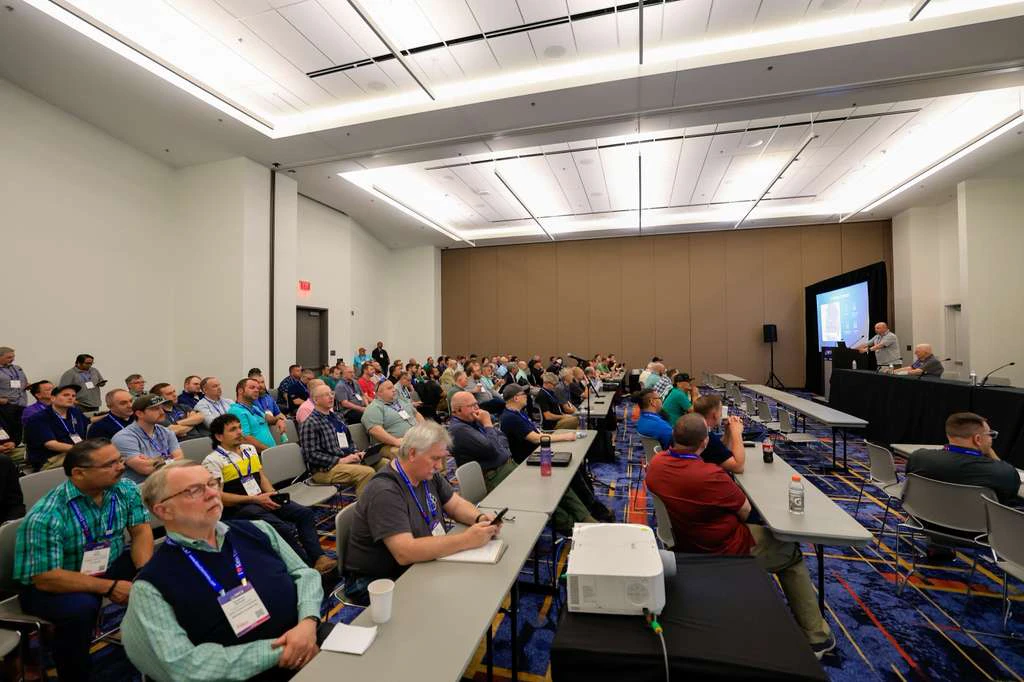
In today’s fast-paced world, where first responders and public safety agencies rely on seamless communication, building a resilient in-vehicle network is no longer a luxury—it’s a necessity. At the IWCE 2026 session, “Building an In-Vehicle Network for the Future,” Joel Bach, Senior Product Marketing Manager at Ericsson Enterprise Wireless Solutions, and Matt Brungardt, Associate Director at Verizon Frontline Crisis Response Team, shared their expertise on how to navigate the complexities of public safety networks. This sponsored panel session provided a comprehensive roadmap for agencies to align their mission-critical needs with the right connectivity solutions.
The Importance of Reliable Networks for First Responders
A staggering 75% of first responders now rank access to a reliable and resilient network as the most critical factor for day-to-day communications. Whether responding to emergencies or preparing for potential crises, public safety agencies need networks that can withstand disruptions, maintain uptime, and adapt to evolving challenges. This session emphasized that choosing the right network doesn’t have to be overwhelming. By leveraging a clear “Good, Better, Best” decision framework, agencies can identify solutions that meet their operational needs, budget constraints, and risk tolerance.
Addressing Today’s Connectivity Challenges
The session highlighted several key challenges facing vehicle connectivity today:
Inconsistent Connectivity: Many agencies struggle with coverage gaps and expensive carrier redundancy, which can hinder mission-critical operations.
Deficient Location Services: Accurate location tracking is essential for real-time decision-making, yet many systems fall short.
Real-Time Applications: AI and autonomous systems require local processing to function effectively, adding another layer of complexity.
Investment Protection: With modems releasing every 18 months, agencies need solutions that allow for upgrades without overhauling entire systems.
Cutting-Edge Solutions for In-Vehicle Networks
Ericsson and Verizon Frontline presented innovative solutions to address these challenges, focusing on advanced technologies and deployment strategies:
Dual-SIM and Multi-Modem Capabilities
The introduction of industry-first modem routers like the R2400 and RC1250 offers dual-SIM and dual-standby capabilities, enabling active-active carrier redundancy. This ensures uninterrupted connectivity, even in the most challenging conditions. These routers can be custom-built and deployed for various use cases, providing unparalleled flexibility.
Edge AI and Software-Defined Radio
The R2400 router, equipped with edge AI inferencing and software-defined radio, allows for advanced deployment customization. This technology supports real-time applications, such as AI-driven decision-making and autonomous systems, ensuring future-proofing and enhanced performance.
Vehicle Integration and Operational Monitoring
With features like real-time kinematics, CANbus integration (eliminating the need for external streamers), and dead reckoning using GNSS, these solutions provide precise operational monitoring. This is particularly critical for first responders who rely on accurate data to make split-second decisions.
Captive Modem Strategies
The session also explored the benefits of captive modem strategies, which offer deployment flexibility, pay-as-you-go scaling, and enhanced network capabilities. These strategies allow agencies to adapt to changing needs without significant upfront investments.
Verizon Frontline: A Proven Partner in Crisis Response
Verizon Frontline’s Crisis Response Team has demonstrated its commitment to supporting public safety agencies. By 2025, the team had responded to over 1,500 incidents, loaned 9,000 solutions, and collaborated with more than 700 agencies across 47 states. This track record underscores Verizon Frontline’s ability to deliver reliable, resilient networks that first responders can depend on.
Key Takeaways for Public Safety Agencies
By the end of the session, attendees walked away with a clear understanding of:
The Good, Better, Best Framework: A step-by-step guide to aligning mission requirements with the right connectivity solution.
Technological Advancements: How dual-SIM failover, LEO/Satellite paths, and captive modem strategies can enhance network resilience.
Practical Deployment Tips: Strategies for integrating advanced wireless capabilities without overhauling existing systems.
As Joel Bach aptly put it, “Advanced wireless capabilities provide unparalleled futureproofing, performance, and AI enablement.” With these insights, public safety agencies are better equipped to navigate the complexities of in-vehicle networks and ensure their teams are always connected, no matter the circumstances.