Dr Fatih Birol's views on the World Energy Outlook
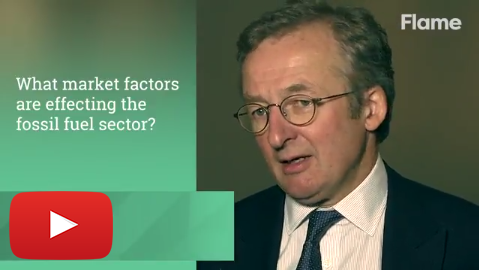
Ahead of his presentation at the Flame Conference this March, Dr Fatih Birol shares with the Flame Blog some of his insights into the World Energy outlook, a snapshot into what you can expect to hear from Dr Fatih Birol in Amsterdam on March 11th.
You have just published the World Energy Outlook – what were the key findings?
It’s not easy to summarise some 700 pages of a report covering something as complex and multi-faceted as the energy sector, but what became clear as we worked on the World Energy Outlook in 2012 is that we are seeing some quite fundamental shifts in the foundations of the global energy system, with far-reaching consequences for energy markets and trade. The clearest example of this is the resurgence of oil and gas production in the United States, thanks to the technologies and know-how that are unlocking light tight oil and shale gas resources. This development has already had implications well beyond North America – and beyond the energy sector – and these continue to be visible throughout our projections. By the end of this decade, we expect the United States to become, until the mid-2020s, the world’s largest producer of both oil and natural gas. Thanks to increased supply – and to reduced demand as fuel-efficiency in transport improves – the US requirement for imported oil declines rapidly. The country also becomes a small but significant exporter of natural gas. The amount of gas exports may however change due to changes in the regulatory or price environment.
These are hugely significant developments that have the potential to redefine the geopolitics of energy, but they are by no means the only signs of a changing energy map. Elsewhere in the world you have important steps in Iraq towards revitalising its oil sector – an issue we examined in a special WEO report; you have a retreat from nuclear power in some countries; you have indications that major economies are again giving serious attention to energy efficiency. But you also have clear evidence that – overall – the world is still failing to put the global system on to a more sustainable path. The climate goal of limiting the long-term increase in global average temperatures to 2 degrees Celsius becomes more difficult and costly with each year that passes.
What is your resulting view on the prospects for the natural gas industry?
The overall outlook for natural gas in our projections is bright: it is the only fossil fuel for which global demand grows in all of the policy scenarios that we present in the World Energy Outlook. This reflects the likelihood that ample supplies will keep gas prices competitive and the fact that it is the least carbon-intensive fossil fuel, so that – compared with other fossil fuels – its use is affected less by policies to curb greenhouse-gas emissions. But it is difficult to draw global conclusions about the outlook for natural gas when you start from a position of such marked regional differences as we see today: there is for the moment a fundamental divergence in markets conditions and prices between North America, Europe and the Asia-Pacific region. At their lowest level in 2012, natural gas in the United States traded at around one-fifth of import prices in Europe, and one-eighth of those in Japan. Gas markets in different parts of the world are also at different stages of development, with the scope for growth in demand much greater in emerging economies where gas only has a small share of the current energy mix.
Our projections for gas use by region reflect these starting conditions. Overall, the rate of growth over the period to 2035 in non-OECD countries is three times faster than in the more mature OECD markets. Active policy support pushes gas demand in China, India and the Middle East up particularly strongly. Within the OECD, lower prices and abundant unconventional supplies mean that gas overtakes oil in the United States by 2030 to become the largest fuel in the energy mix. However, new energy efficiency policies and higher prices constrain gas use in Europe and Japan, with demand in the EU rising back above 2010 levels only from 2020.
In terms of international trade, in our view the current divergence between regional markets is set to diminish as new sources of gas supply emerge, including unconventional gas, and new LNG infrastructure and greater operational flexibility in international trade open up new trading connections. Trade along some of the traditional axes remains strong – such as between Russia and the European market – but opportunities to take advantage of regional price differentials spur the development of new routes, such as between the Atlantic basin and Asia-Pacific markets, that accelerate the process of globalisation of natural gas markets. As gas supplies and trade flows become more diverse, you are likely to see continued pressure on the main conventional exporters and on oil-linked pricing mechanisms. Additionally, investments in future natural gas supply projects will have to consider the evolution of relative price competiveness of gas versus other fuels, especially coal which is abundant in many emerging economies.
What was the most surprising finding during your research for the World Energy Outlook?
The most surprising finding emerged from the work that we did on energy efficiency, the ‘hidden fuel’. It’s no secret that there is significant scope for improving energy efficiency worldwide; but the size of these potential gains was still striking – and we looked only at efficiency improvements that are economically viable and we didn’t assume any major or unexpected technological breakthroughs. The message to policymakers was clear: if you can remove barriers obstructing the implementation of these efficiency gains, the potential benefits in terms of energy security, economic growth and the environment are enormous. In our analysis, only one-third of the potential to improve energy efficiency will be captured by policies currently in place or under consideration.
What energy sources do you see dominating for the short, medium and long term?
The energy mix at global level changes only slowly over the coming decades in our central scenario, the New Policies Scenario. Fossil fuels continue to dominate, but their overall share in global primary energy use falls from 81% today to 75% in 2035. The share of renewables increases from 13% to 18% over the same period. Oil continues to be the most important fuel in the primary energy mix, but its share falls by 5%, to 27% in 2035. We expect growth in demand for coal to start slowing from around 2020, while strong growth in gas demand means that it all but catches up with coal in the global energy mix by 2035.
What do you see as the biggest challenges that the natural gas industry has to face moving forward?
The increasing importance of unconventional gas resources presents a number of unique challenges to the industry. Producing unconventional gas is an intensive industrial process that usually imposes a generally larger environmental footprint than conventional gas development. In May 2012, we published our “Golden Rules for a Golden Age of Gas”, a WEO special report that set out the principles that could allow policy makers, regulators, operators and other stakeholders to satisfactorily address the environmental and social impacts of unconventional gas development. There is palpable public concern over the environmental and social impacts of tapping unconventional reserves, and if the industry fails to allay these concerns, this could halt the unconventional revolution in its tracks. In essence, the industry needs to work hard to earn or maintain its “social licence to operate”. For our part, we will be convening in March 2013 the first meeting of a high-level international forum on unconventional gas best practices, aimed at facilitating a targeted international discussion on issues that are essential to the safe and sustainable development of these resources.
Which geographical region do you see offering most promise for natural gas production?
The good news for natural gas consumers is that quite a few regions show promise when it comes to future production: this is due in part to the fact that unconventional gas resources are more widely distributed around the world than conventional. It is also because, over the last few years, there have been substantial upward revisions to estimates of proven reserves and ultimately recoverable resources of both conventional and unconventional gas. In our projections, Russia remains a key producer of natural gas and the largest global gas exporter. North American gas production is also expected to expand strongly, thanks mainly to shale gas in the US. But among the emerging gas regions I would certainly mention Australia, where output is expected to triple over the projection period on the back of new LNG export projects. China is also expected to emerge as a major producer on the back of its unconventional resources, although these will take time to develop. In the Middle East, gas production is expected to increase strongly in Iraq. There are also some new conventional gas production areas showing great promise, notably off the east coast of Africa and in the eastern Mediterranean.
Where do you see as the biggest market for natural gas in coming years?
The largest consumers of gas remain the main mature markets of North America and Europe, but the fastest growing gas markets – by a distance – are those emerging in China, India and across the Middle East. The European Union continues to be the largest market for imported gas, but overall a large share of the increase in global gas trade is to markets across the Asia-Pacific region: China alone accounts for nearly 40% of the expansion in world trade. Considered by sector, gas-fired electricity generation accounts for the largest share of increased demand, followed by gas for industry and then for buildings. But the fastest rate of growth, albeit from a low starting point, is in the use of natural gas as a transportation fuel, stimulated by high oil prices, supported by government policies in some countries and also motivated at times by concerns about pollution.
Dr Fatih Birol is the Chief Economist at the IEA in Paris and is responsible for the IEA’s flagship World Energy Outlook publication, which is recognised as the most authoritative source of strategic analysis of global energy markets. Dr. Fatih Birol has been named by Forbes Magazine among the most powerful people in terms of influence on the world’s energy scene and is also the Chairman of the World Economic Forum’s (Davos) Energy Advisory Board. He is also the founder and chair of the IEA Energy Business Council, which provides a forum to enhance cooperation between the energy industry and energy policymakers.
Dr Fatih Birol will be speaking at Flame Conference on Tuesday 12th march at 11:00am
To find out more about the Flame Conference, including viewing the Speaker Line-Up, Latest Agenda, or to Register, visit the Flame Website for more details.