Posted by Matt Swenson on 09 October 2026
Study: Vacations Are Getting Longer

The importance of attracting visitors to your destination is increasing. According to a recent survey conducted by Landing, which provides flexible, fully furnished apartment rentals for mid-to-long-term stays across more than 250 U.S. cities, 85% of American travelers have taken a trip of five nights or more in the past five years.
That means more time to explore destinations, eat at restaurants, and shop at local stores. For destinations, it’s an opportunity to sell themselves for return visits, create word-of-mouth excitement among peer groups, and, of course, collect valuable tax revenue from hospitality establishments.
Of course, a roughly weeklong trip is going to be fundamentally different than just a few nights. The need for greater amenities rises, especially among features than have the comforts of home like a kitchen, washer-and-drier, and dedicated parking.
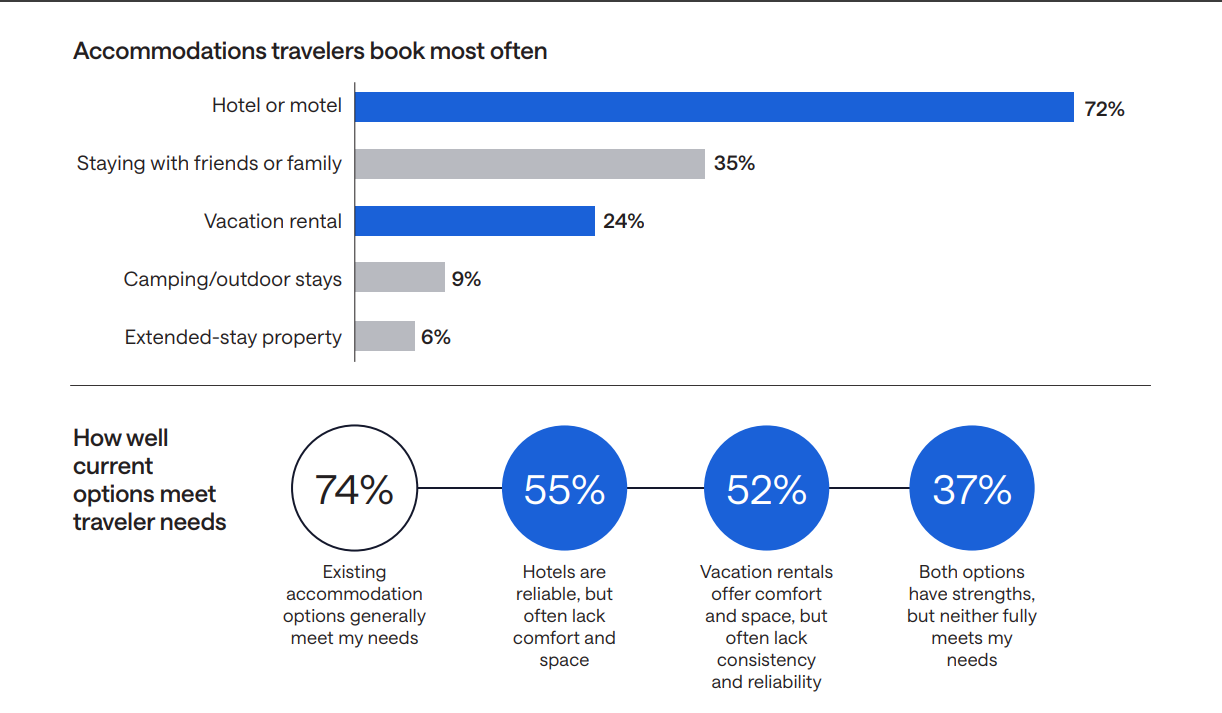
The study, which polled 1,000 U.S. consumers, finds that vacationers are making do with traditional choices but wish for better accommodations. In fact, 58% say no lodging option fully meets their needs at least some of the time.
 Credit: Landing: State of the Long Stay
Hotels are described as reliable but often lacking comfort and space by 55%, while 52% of respondents said vacation homes are comfortable yet often lack consistency and reliability. Of note, 60% of respondents said they would often or always choose an option that combines hotel-level consistency and support with the space, kitchen, laundry and comfort of a furnished apartment at a comparable price.
The results provide a window into ways destinations can better serve their visitors.
“There’s a meaningful difference between a stay that works and one that genuinely makes the trip better,” said Bill Smith, founder and CEO of Landing. “As travel habits evolve, our industry has an opportunity to rethink the spaces we offer and the experience around them so travelers don’t have to compromise on what matters most.”
When forced to settle, travelers do tend to spend more—a short-term gain that be cancelled out by the loss of future business. According to the report, 41% spend more on food, backup arrangements or upgrades when accommodations fall short and 43% say they spend significantly more time researching the next trip when their most recent vacation falls short of expectations.
That research is happening in real time, with 69% of travelers changing how often they take trips, how long they stay, or both
Subscribe to our monthly newsletter, covering the top news, trends, and activations in destination marketing.