Posted by IMN on 09 June 2026
The Great World Cup Gamble: Inside the STR industry's biggest opportunity in decades

The buzz is real. As the 2026 FIFA World Cup approaches, short term rental operators across the United States are asking themselves the same question: Is this the opportunity of a lifetime, or are we setting ourselves up for disappointment?
If you're in the STR space, you've probably already heard the whispers at industry events, seen the LinkedIn debates, and maybe even started crunching your own numbers. The World Cup is coming to North America, and for the first time in decades, the U.S. will be front and center as a host nation. But what does that actually mean for your rental portfolio?
The optimism Is overwhelming
A recent LinkedIn poll asked STR professionals what they expect from the 2026 World Cup market. The results? 78% believe STR demand will surge. 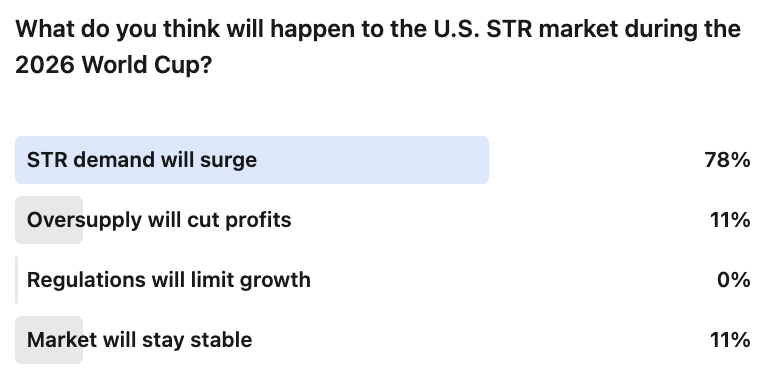
And the early indicators suggest they might be onto something. Recent performance data from AirDNA shows some host cities already experiencing dramatic demand increases, with markets like Monterrey seeing nearly 200% growth and Guadalajara showing similar surges. Even traditionally strong markets like Dallas/Fort Worth are posting 40-60% demand spikes.
These aren't marginal improvements. These are the kinds of numbers that make investors sit up and pay attention.
But here's where it gets interesting
Not every host city is experiencing the same trajectory. While some markets are exploding, others tell a more nuanced story. Cities like Miami and New York, despite their tourism powerhouse reputations, are showing surprisingly modest growth in the single digits.
What's happening here? These cities already operate at high occupancy levels year-round. The World Cup might not represent the same transformational opportunity it does for markets with more capacity to absorb demand surges.
The skeptics have valid points
Remember that LinkedIn poll? While 78% expect a surge, 11% worry that oversupply will cut profits, and another 11% think the market will stay stable. These aren't just pessimists, they're operators who've seen boom-and-bust cycles before.
Here's their concern: What happens when every STR owner in a host city thinks they can triple their rates for World Cup dates? What happens when hotels add inventory, new STR properties flood the market, and everyone's competing for the same guests?
The risk of oversupply is real. We've seen it happen with other mega-events. Operators get greedy, prices skyrocket, and suddenly travelers are looking at alternative accommodations or even different cities altogether.
The smart money is playing the long game
The most sophisticated operators aren't just thinking about those 30 days in June and July 2026. They're thinking about:
- Strategic positioning: Markets showing explosive growth aren't just seeing World Cup bumps, they're emerging as serious STR markets with long-term potential. The World Cup is accelerating trends that were already in motion.
- The Halo Effect: Cities hosting matches will see increased international visibility. That awareness doesn't disappear when the final whistle blows. Smart operators are positioning their properties to capture post-World Cup tourism.
- Operational excellence: The World Cup will separate professional operators from amateurs. Properties that deliver exceptional experiences during this high-stakes period will build reputations (and reviews) that pay dividends for years.
What this means for your strategy
The data reveals three distinct opportunity zones:
- High-growth markets (100%+ demand increases): You're in the sweet spot, but don't get complacent. These markets will attract new competition. Focus on differentiation and guest experience.
- Moderate-growth markets (20-60% increases): This is actually the Goldilocks zone. You'll see meaningful revenue increases without the feeding frenzy that leads to oversupply.
- Stable markets (under 20% growth): Don't assume the World Cup is irrelevant. Your opportunity might be in capturing overflow from nearby host cities or targeting specific fan bases looking for alternatives to sky-high prices.
The bigger picture
Here's what makes the 2026 World Cup genuinely different: scale and duration. We're talking about 48 teams, 104 matches, and events spread across 16 cities over more than a month. This isn't a Super Bowl weekend or even an Olympics. This is sustained, international demand across multiple markets simultaneously.
The 2026 World Cup represents a once-in-a-generation opportunity for U.S. short term rental operators, but success won't be automatic. It will require strategic thinking, operational excellence, and a clear-eyed assessment of your market's unique dynamics.
At IMN, we're committed to helping STR professionals navigate these opportunities. Our upcoming Short Term Rental Summer Forum will bring together industry leaders, data experts, and successful operators to discuss not just the World Cup opportunity, but the broader trends shaping our industry's future.
What's your World Cup strategy? The clock is ticking, and the most successful operators are already making their moves.
Want to dive deeper into STR market trends and connect with industry leaders? Learn more about IMN's Short Term Rental Summer Forum and join the conversation shaping the future of our industry.