Posted by Shannon Thaler Cherry on 19 October 2026
AI Has the Travel Industry Talking. Now Comes the Hard Part.

In its fourth year, the 2026 World Travel Expo (WTE) Miami is giving artificial intelligence its biggest role yet in its programming, dedicating three 45-minute educational sessions to the technology.
The B2B international travel and tourism trade show is set to run Oct. 27-28 at the Miami Convention Center. Across its 500-plus exhibitors and more than 20 live educational sessions, AI is doing more than trickling into every on-stage discussion. This year, WTE operator Fairfest Media—which acquired the event last year—is giving the tech dedicated airtime.
One of those sessions, “AI Solutions for the Travel Industry,” will feature David Shull, co-founder and CEO of AI-powered travel agency and CRM platform Tern. Shull told eTourism that the growing number of AI-specific sessions—and the presence of people like himself at the show—reflects the “100% momentum” AI has gained in travel.
At a conference two years ago Schull attended, just two audience members in a crowd of 300 raised their hand when asked if they use AI at all in their daily workflows.
“And now to have multiple technology-focused sessions, multiple AI sessions—I think shows that this is something the travel industry is not just is no longer afraid of,” Shull said, acknowledging that the travel and tourism industry has been notoriously slower to adopt AI.
According to Forbes, 58% of content on airlines’ websites is not optimized for LLMs, even as AI traffic to travel sites surges 119% year-over-year among American travelers.
The disconnect underscores how much the industry still has to learn about putting AI to work. “If we all had it figured out, there wouldn't be anything to talk about,” said Sabre Senior Director of Marketing Karen Ring, who’s heading up the event’s day two keynote, titled “Sabre and the AI-Powered Future.” “Almost everyone accepts that AI isn't optional anymore. Far fewer know how to turn it into something that works to enhance efficiency, revenue, and traveler experience day to day,” Ring said.
Shull's goal is to show that technological advances don’t have to come at the expense of the traveler experience.
Consider recent ads for Muse by Facebook, Shull said. “They show somebody lounging in a pool, talking to their phone, not even looking at the screen, saying, ‘I want to stay, change my flight, extend my hotel, tell my dog sitter that I'm going to be late.’” The idea isn’t to eliminate tech, but to use it to spend less time managing logistics and more time enjoying the real world.
And while Shull acknowledged that the scenario in the Muse ad may still involve a learning curve, he sees it as a glimpse of what’s ahead. “The value of travel does not go away in the AI world. If anything, it actually becomes even more important,” he said.
“If you take the optimistic approach, people will be more efficient, which means they’ll have more productivity, which means they’re generating more economic wealth per hour worked, which means more leisure."
Ring echoed that sentiment, urging travel professionals to move beyond the fear that “AI is here to replace them” and focus instead on understanding “the difference between generative AI and agentic AI.” If she had just 30 minutes to teach the industry anything about AI, she said that distinction would be her priority.
“A simple way to remember it: traditional AI predicts, generative AI creates, and agentic AI acts,” she said. “And you don't have to adopt it all at once. Start where it matters most and scale on your own terms.”
Eliminating the Invisible Work
At Tern, AI is already being applied to discovery, itinerary-building, and administrative tasks that eat into travel advisors’ time.
Take Tern’s Groups Feature. Given a request for proposal for room blocks, an AI agent can create a landing page using the details promised in the contract, including information about the room block and a button for direct booking.
The platform can also turn a 100-page PDF hotel contract into marketing materials that advisors can use to promote group bookings to potential corporate clients, Shull said.
In another instance, one of Tern’s AI assistants noticed that a destination partner had missed a payment deadline. The date was buried in the fine print, and no one had caught it.
“AI is eliminating invisible work,” Shull said. The technology frees advisors to spend more time on “face time,” to “spend with clients,” he added. AI can help advisors focus on the small, personal touches that sustain those relationships, from remembering a client’s birthday to sending a personalized note, he added.
For now, AI agents remain limited by the systems and tasks they can access. “AI agents are only as good as the actions that they can take on behalf of the user that they are serving,” Shull said. “But I think that will be short-lived,” he said, because although travel’s AI applications may still seem basic compared with use cases in other industries, he doesn’t expect adoption to slow. Instead, Shull sees the next phase being defined by “more integration.”
That means connecting AI not just to the advisor’s workflow, but also to the suppliers and systems involved in delivering a trip.
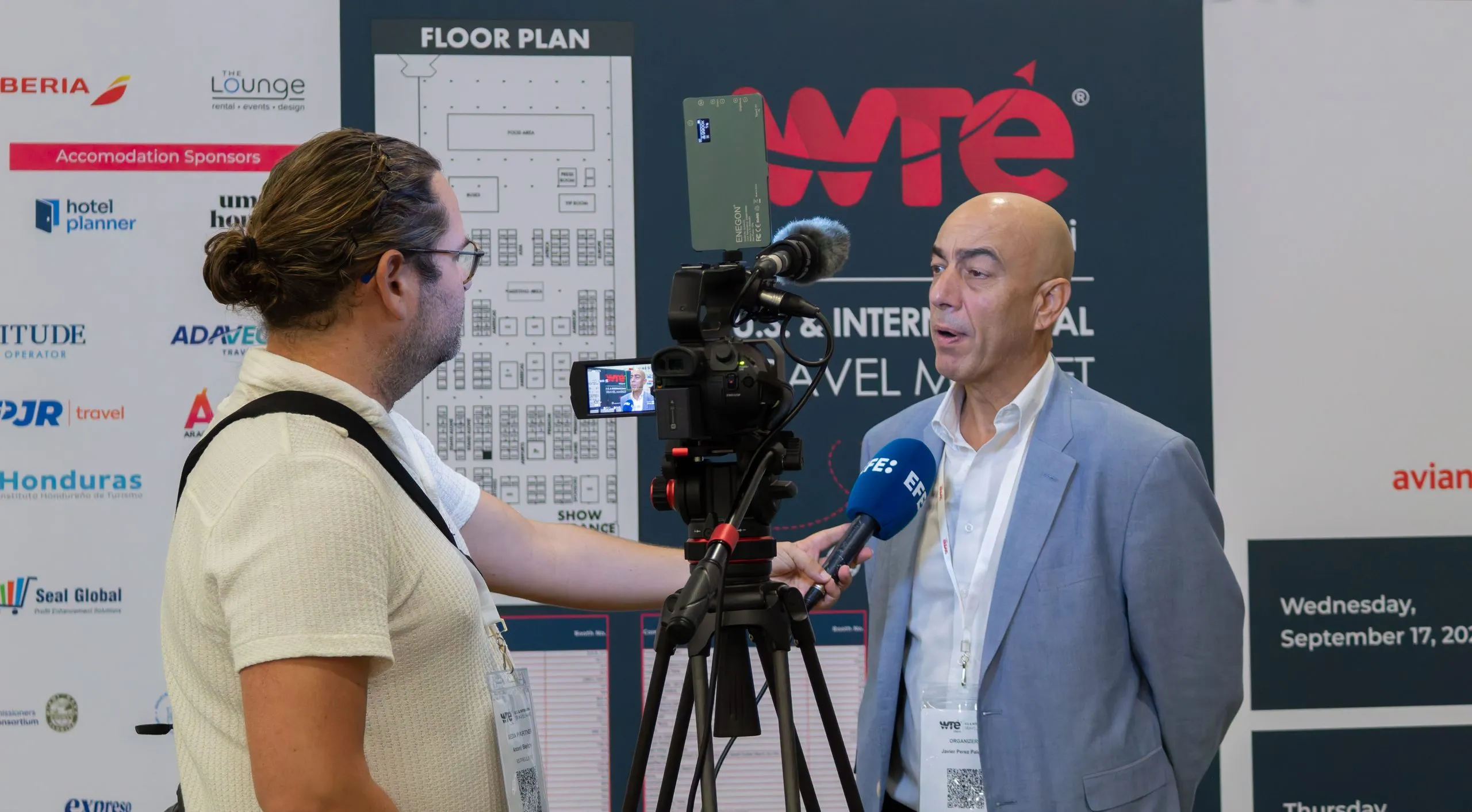 WTE Miami will featuring travel talking points next week in Miami. Photo Credit: WTE Miami
Bringing AI Into the Operation
WTE Miami is putting that integration into practice too. For the first time, the event is incorporating SnapCardAI, an AI-powered matchmaking platform designed to recommend relevant on-site meetings within the show's hosted-buyer format. The platform also stores lead-management data like badge scans and digital business cards.
Today, travel advisors can spend considerable time coordinating with each player in what remains a fragmented process. With access to a connected database of airlines, destination partners and hotels, AI could help bridge those gaps.
It would allow the technology to “tap into these systems and these networks in a way that traditional agents would have a hard time doing.”
In short, Ring said: “Think of it [AI] as the best assistant you've ever had: one that clears the admin, speeds up the routine, and helps you put genuinely personal options in front of every client. [...] Start small, start now, and build from there.”
Photo Credit: WTE Miami
Subscribe to our newsletter, covering the top news, trends, and activations in destination marketing.