State of Biotech Partnering and Deal-Making
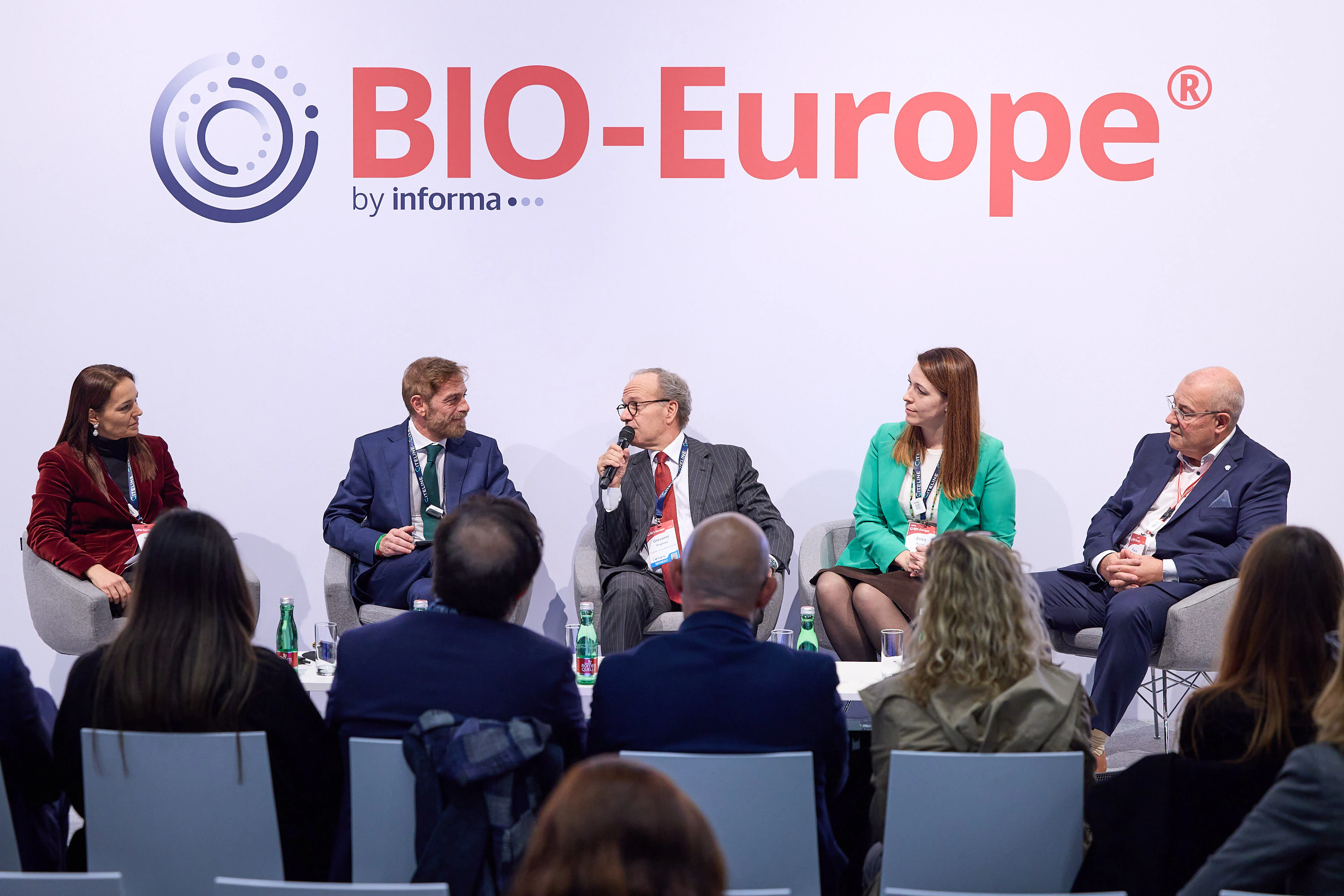
With four months to BIO-Europe 2026, Europe’s largest and longest-running partnering conference for the global biopharma industry, it is time to reflect on the state of biotech partnering and the factors influencing its direction. From the Asia-Pacific region rapidly transforming global biopharma to the yin and yang of early- and late-stage investments, we asked our speakers to share the early scoop on the latest in the world of biotech partnering and deal-making.
Asia-Pacific Regional Advance in Biotech
Data from BioPharma Dive shows that more than 25 deals were agreed in the first six months of 2026 between Chinese-based biotechnology companies and US or Europe-based biopharmaceutical companies. This continues the trend from 2025 that saw Chinese drug developers sign 157 out-licensing deals with pharmaceutical companies at total worth of $136 billion.
If in the past Chinese capital was flowing to Western biotech companies, now the flow has reversed. Chinese biotech creates innovative assets and continues early development in China until a global pharma company licenses the programme. While Western capital predominantly funds late-stage trials and commercialization, there is a shift in perception from China as solely a commercial market to China as a source of pipeline innovation.
According to Daniel Chancellor, VP, Thought Leadership at Evaluate, the recent Pfizer-Innovent and BMS-Hengrui deals are signalling an important change in Chinese biopharma landscape: a move beyond a source of innovation to a source of execution, a shift from production of “me-too” drugs to execution of “first-in-class”. Multinational pharma companies are tapping into China to accelerate and de-risk their early-stage assets. As a result, China has led the US in Phase I research for at least five years, and the execution gap is growing. There are multiple factors contributing to Chinese biotech repositioning, including lower development costs and increased investment in R&D, regulatory flexibility, and an influx of talented scientists and entrepreneurs migrating back to China – the so-called reverse brain drain.
In conversation with Melanie Senior, Healthcare Writer and Analyst for Nature portfolio, Evaluate Pharma and Citeline, an interesting perspective on the China-West relationship emerged where China can be a “formidable competitor to the West” and an equally “powerful enabler”. China’s approach to streamlined innovation with speed, scale, and cost efficiency can be a great learning for both the US and Europe. However, there are learnings for the Chinese biopharmaceutical landscape too, particularly in terms of maturing their venture capital system and fostering cutting-edge and first-in-class novel mechanisms. Despite China’s leaps in early development, it continues to lag in its late-stage performance and commercialisation. BioXconomy highlighted three areas that impact the lower success rate of late-stage development in China: chemistry, manufacturing, and controls (CMC); quality gaps; and clinical-trial design gaps.
The panel discussion ‘How is the APAC region reshaping global biopharma’, on day three of BIO-Europe 2026, will explore how APAC is reshaping the industry landscape through homegrown biotech innovation, increasing R&D capabilities, and growing capital markets that are attracting global attention. The discussion will examine key trends driving the region's ascent, including regulatory modernization, cross-border partnerships, and the rise of China, Japan, South Korea, Singapore, and Australia as innovation centres while addressing the strategic considerations for Western companies seeking to access APAC markets and technologies.
M&A Deals in Biotech on the Uptick
The patent cliff is more than a buzzword in the biotech sphere with $500bn+ in revenues predicted to be lost between 2026 and 2032 as highlighted by Daniel Chancellor in an exclusive conversation with the team of BIO-Europe. He shared, “The M&A flurry of 2025 and 2026 has largely been among companies with the greatest exposure to this patent cliff and the lowest organic growth rates. But these M&A deals alone won't bridge the scale of revenues at risk, so I would expect M&A to continue at its current pace for the foreseeable future.”
In 2025 deal-making rebounded strongly with a wave of mega-mergers and licensing agreements that saw the total value of biotech M&A by mid-2025 exceed all of 2024. Nonetheless, the Q1 2026 Biopharma Licensing and Venture Report by JP Morgan indicated that capital deployment remains focused on established companies with advanced pipelines – an indicator of continued preference of the market for late-stage assets. Notable deals include Merck’s acquisition of Terns Pharmaceuticals for $6.7 billion, and Eli Lilly’s acquisition of Centessa Pharmaceuticals for $7.8 billion ($6.3 billion upfront). Daniel says he is seeing companies be more intentional and aggressive when managing their pipelines, with fewer new drugs being added to the top of the funnel and more drugs than ever being cut during Phase I. This concentrates R&D budgets around a tighter set of Phase II and III drugs, allowing the most promising candidates to be prioritised and accelerated.
Melanie Senior also reflected that the geopolitical landscape and the post-COVID crash in the biotech industry are key factors in investors becoming more risk averse. There is a focus on risk mitigated assets with validated technologies and validated targets. She added that “the bigger the drugs, the tougher it is to replace those revenues once patent protection is lost”. However, Melanie believes this is “the rhythm of the pharmaceutical industry”. The life sciences industry has lived that cycle before and will go through the same multiple times in the future, including when the GLP-1 blockbusters start to lose protection in the 2030s.
Finally, in terms of the public market – Tim Haines, Managing Director at Abingworth, emphasised that the XBI (US Biotech index) has performed well in the last year, growing about 35%, twice as much as the S&P. This is significantly driven by increased M&A activity with a focus on later stage assets. According to BioPharma Dive data, in the first quarter of 2026, Biopharma companies banked $1.7 billion in IPOs all, the most of any quarter since 2021. This June also saw the largest-ever biotech IPO completed – Parabilis Medicines at $670 million, bringing the total number of large IPOs to 12 and $4.1 billion combined. However, macroeconomic factors and the increased changes in leadership and policies at the FDA are expected to continue influencing the public markets.
BIO-Europe 2026 is bringing all these forces shaping the future of biopharma partnerships and M&A with a panel discussion on “Navigating partnering and business development in a shifting global landscape”. Analysts and experienced BD executives from pharma and biotech will dive into real-world case studies spanning transformative M&As, innovative licensing agreements, and cross-border collaborations that highlight strategies for navigating valuation challenges, harnessing AI-driven innovation, and addressing unmet medical needs.
Early and Late-Stage Biotech Landscape
JP Morgan’s report shows that throughout Q1 of 2026, biopharma M&A activity continued to be heavily reliant on Phase II, Phase III, and approved-stage companies – in line with the buyer’s preference for more mature and de-risked assets.
According to Melanie Senior, there is a need for diversified portfolios where investments span early-, mid- and late-stages (an approach taken by funds at Forbion, Sofinnova and EQT) and where new applications of existing technologies, such as CAR-T therapies’ and T cell engagers’ expansion into autoimmune disease, will be more important than ever.
Later-stage oncology deals have dominated the licensing agreements in Q1 2026 with large milestone packages and premium upfront investments. This is as expected from a market that is experiencing a demand for differentiated assets with near-term commercial relevance. On the other hand, biologics (and in second place, small molecules) continue the concentration of modalities as seen during 2025. Other modalities such as gene therapy, cell therapy, gene editing, and immunotherapy are also in the deal mix signalling an ongoing interest in next-generation therapeutics. Neuroscience is also returning in the picture following recent regulatory successes in Alzheimer’s and schizophrenia with investors’ focus on studies evaluating treatment at earlier stages before symptoms become apparent.
BIO-Europe’s agenda will explore the challenges and opportunities ahead of both early and late-stage biotech through the prism of clinical insights, strategic development, investment, and regulation. The panel discussion ‘Scaling Success: The Dynamics of Late-Stage Investment in Biotech’ will bring together top investors, executives, and industry experts to dive into how late-stage funding is shaping the trajectory of biotech’s most promising ventures. But you can’t talk about late-stage funding without looking at early-stage investments – the ‘Fuelling Innovation: The State of Early-Stage Investment in Biotech’ will explore the world of early-stage biotech investment through firsthand accounts of challenges, opportunities, and critical factors influencing growth in biotech.
The state of biotech partnering and deal-making is evolving, shaped by an ever-changing geopolitical landscape, regulatory challenges, and emerging opportunities and players. If this article leaves you curious, the Business of Biotech track at BIO-Europe 2026 will delve deeper into strategies to drive dealmaking and partnering, innovative business models, and investment trends.
Immerse yourself in conversations that shape the future of biotech at BIO Europe 2026, November 9-11 in Cologne, Germany. Take advantage of the lowest registration rate available until July 31 and join us for three days of content, fireside chats, networking meetings, and that unique feeling of community at BIO-Europe 2026.