FSRU Technology: An Interview with Höegh LNG CEO Sveinung Stohle
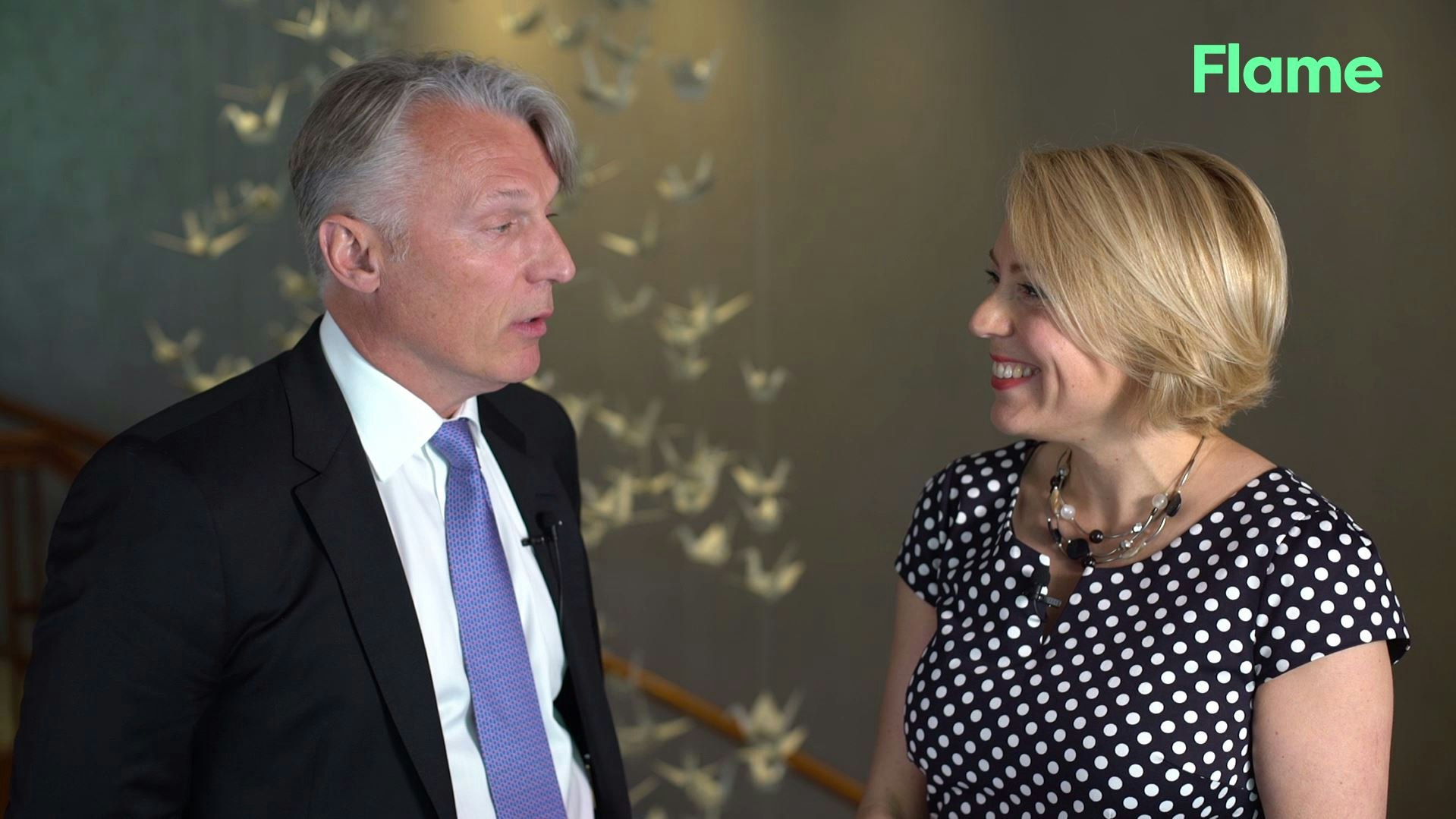
Sveinung Stohle is the President and CEO of Höegh LNG, a NYSE listed company, and the owners of the world’s largest fleet of FSRU vessels. We spoke to him about the economic advantages of floating regasification, the geographical dispersion of LNG demand, the myth of market oversupply and the shift to shorter term LNG supply contracts.
“We have taken what used to be a project that would take five or six years to build – and we can now do it in six months.”
Let’s talk about the LNG Market as you see it. How would you characterise it?
Well, if you look at the big numbers, 2017 saw the greatest increase in the overall market in probably the last 10 years. The market increased by 12 -13% - that’s great, that’s good for all of us in the LNG market, because as the market grows, so do the pieces that we all put into the market. And I would say that I think this trend will definitely continue, simply because there is still somewhere around 100 million tonnes of new production capacity that is being built, which will take the total market from 300 last year to 400 plus tonnes in a year and a half (so 2020). That will continue to drive the need for what we deliver – new FSRUs to import the gas, new ships – so I think the outlook is very, very promising.
And geographically – you’re in a number of different areas – which ones are you anticipating concentrating on?
Well it’s kind of hard to specify only one area, because we operate FSRUs at the moment in six different countries across the globe. I would say, though, that if you look at the first quarter of this year, you see the same trend that we saw for the whole of 2017: Asia. Asia is where the imports are increasing the most, and certainly by far into China, into India, Pakistan, some of the new countries. So I believe that we will continue to see the same development in Asia at the forefront.
Where do you see those imports coming from, though?
Well from anybody who has gas available.
And wants to export, and is seeing that as their preferred market?
Yeah, well the main producer is and continues to be Qatar. But the fastest growth is now coming from the US and Australia. So those three will continue to dominate the market.
We’re hearing a lot already at Flame about how important new technology is at keeping production costs down and squeezing out every last bit. I just wonder what your thoughts on that? Plus what you are doing with any technology to really keep the costs how you want them to be?
To give you a bit of perspective, what we have done as Höegh LNG for the FSRU side – first of all what we have done with the FSRUs is basically to disrupt the historical way of importing LNG, because that was to build a land based facility. Nobody does that anymore. There are a few, but very few. So we have taken what used to be a project that would take five or six years to build – and we can now do it in six months. And the regas cost for an FSRU is less than half of what the cost for the land based facility is, and we continue to build on that. So in terms of technology, I think what we have done in the FSRU segment is really to bring down the cost of importing LNG to a very, very competitive level.
Is there anything more that you are working on at the moment to try and get it down even further?
Yeah, there is. If you look at the first FSRU we ordered ten years ago, and the one we are building today – what we are building today is larger, it’s more efficient, and it’s certainly much more environmentally friendly. So we use less energy, the footprint is very, very small, and obviously we’ve been able to improve how we use the energy to operate the FSRU significantly over this period.
Given all of that, do you see any more competitors to yourself coming into the market?
We compete every day. The list – when we basically created this market, Höegh did that together with two other companies, Excelerate and Golar – that list is longer today. So we’ve added two, three more over the last three or four years. But that’s okay and the market keeps growing. So in ten years, the market has gone from one FSRU to today twenty three.
So let’s look forward ten more years then – how many?
Well certainly our aim would be – we have a fleet of ten FSRUs today, so we are the biggest in the segment – our ambition is to definitely continue to be the largest provider. And by that time we should have at least doubled the fleet, and maybe even more than that.
So you’d be confident to say twenty in ten years.
Within ten years, or after ten years?
Well it takes two and a half years to build one right – so having twenty in operation or under construction.
And do you think – I don’t know if you want to keep the same ten year perspective, but I wonder what you think we’ll be talking about at Flame in let’s say ten years.
Well if you don’t mind I think ten years is perhaps a bit too long.
Fair enough - two, three?
Well, I think there are going to be some very large changes over the next two, three years – this is on the production and supply side – simply because there have not been any investment decisions made for building new LNG facilities now for more than two years. And when you know that it takes at least five or six years before those facilities are ready to start producing… I think people are saying that the market is oversupplied, and I totally disagree with that. The market is long, yes, but the gas is being sold. If it was oversupplied it wouldn’t be sold. So as long as you are, as a seller, willing to accept the price, you will sell your gas. And that, coupled with the fact that no new investment decisions have been made for me means that three, four, five years down the line, I think there will be a sharp uptick in the demand, and maybe the gas will be there.
Do you see a change in contract length then?
I think that what has happened the last three / four years in particular is that, number one, it is a buyer’s market. And I don’t see that changing for the three, four, five years, no. There’s too much capacity being built. And what has that done? That has basically dismantled the old model of Tokyo Gas buying four million tonnes over twenty years. Nobody does that anymore. So the contracts will be shorter, the volumes will be smaller, and buyers will look to multiply where they buy from – and the market will give them that. And that’s all good.
Would you say interesting as well?
Yes, very interesting.
