Posted by IMN on 27 July 2026
SFR & BTR Industry Report: Occupancy, rent growth, and capital markets

The single family rental (SFR) and build-to-rent (BTR) sectors have entered what industry veterans are calling a "period of recalibration." The era of effortless returns in residential real estate has given way to a more demanding environment.
At this year's Real Estate Private Funds Summer Forum in Newport, RI we assembled a distinguished panel of SFR and BTR leaders to discuss the unvarnished reality of today's market. What emerged was a nuanced portrait of an industry in transition: one facing genuine headwinds, yet discovering unexpected opportunities for those willing to adapt.
The complicated supply situation
For those who delivered BTR assets in 2023-2024, the landscape shifted dramatically. The Southeast markets that were once relatively insulated suddenly faced a wave of new BTR deliveries going head-to-head with existing properties. The result? Flat to negative trade-outs on new leases, while renewals still show low single-digit positive growth.
But here's the twist: several operators reported a surprising shift in recent months. After struggling with 90% occupancy and heavy concessions through the fall, some woke up in April to find they had no units left to lease. Concessions came off and suddenly they were leasing at higher rates than just months earlier.
The takeaway? Markets are behaving differently and timing matters enormously. Some portfolios are bifurcated, assets delivered into high-supply markets are leasing well below market value (creating future upside), while properties in less saturated markets are achieving market rent with modest 2-5% growth.
The retention game: your secret weapon
If there's one metric everyone's obsessing over, it's retention. BTR properties have a genuine advantage here, with some operators hitting 70-75% renewal rates.
The secret? As one panelist joked, "the killer app in BTR is garages." Once residents fill up that garage with stuff, moving becomes exponentially harder. But it's more than storage. These are 1,500 to 1,900 square foot homes with 3-4 bedrooms, yards, and often no neighbors above or below. It's a qualitatively better product, and residents know it.
The challenge is navigating renewal pricing in a competitive environment. Most operators are threading the needle with 7-10% increases, enough to capture value but not so much that residents start shopping around.
Getting creative on operations
With rent growth constrained, operational excellence is everything. Technology is making real impacts. AI is helping analyze data more efficiently and making smaller properties viable to operate with minimal on-site staff. Self-guided tour technology and voice AI are game-changers for properties under 100 units.
In-house maintenance is the new frontier. Instead of paying vendors $25 per toilet paper holder replacement, operators are training on-site techs to handle more work internally. One company reported a $75 unit turn by keeping it in-house, a massive savings when large-format homes can cost thousands to turn.
Ancillary revenue matters. Bulk cable packages, solar installations, and other services create win-wins, residents get better service at lower cost while operators capture margin.
Capital markets reality check
Remember when everyone said "cap rates have to come down"? They didn't. There's been an acceptance of that reality. The pension funds and life companies everyone hoped would buy BTR assets at compressed cap rates are still mostly on the sidelines.
This has led to creative exit thinking. Some operators are analyzing retail sales of individual units as an alternative. The math shows that even with friction costs, selling units individually to homeowners could yield 15-25% better returns than a portfolio sale at current cap rates.
The capital flowing into the space is looking for longer duration, 10+ years rather than traditional 3-5 year holds. Opportunity Zone structures are particularly attractive, offering tax advantages that allow for different cost of capital.
The regulatory reality
The housing bill that supposedly bans institutional investors from buying single-family homes? It's largely "fake news," as one panelist bluntly put it. The bill says investors are banned "except for X, Y, Z" and X, Y, Z covers everything everybody actually does. The provision forcing BTR operators to sell after 7 years was also struck from the bill.
The bigger challenge? Local municipalities and NIMBYism. Operators shared stories of fantastic dirt in prime submarkets they can't develop as BTR because cities won't approve it, even in areas desperately needing housing.
The entitlement process remains a significant bottleneck, often taking 18-24 months from land to vertical construction.
The bottom line
The SFR and BTR space is in a fascinating moment. It's not the easy money environment of 2012-2020, but that's revealing who the real operators are. The fundamentals remain strong and in an environment of high mortgage rates and home prices, "home ownership without the hassle" resonates with renters.
Success today requires operational excellence, creative problem-solving, and patience. It requires understanding that different markets are at different points in the supply cycle. Most importantly, it requires conviction in the long-term thesis.
As one panelist summed it up, "I love this asset class. I like that you can deliver a really interesting housing product in some markets that really need housing. Hopefully the rest of the world just gets on board one day."
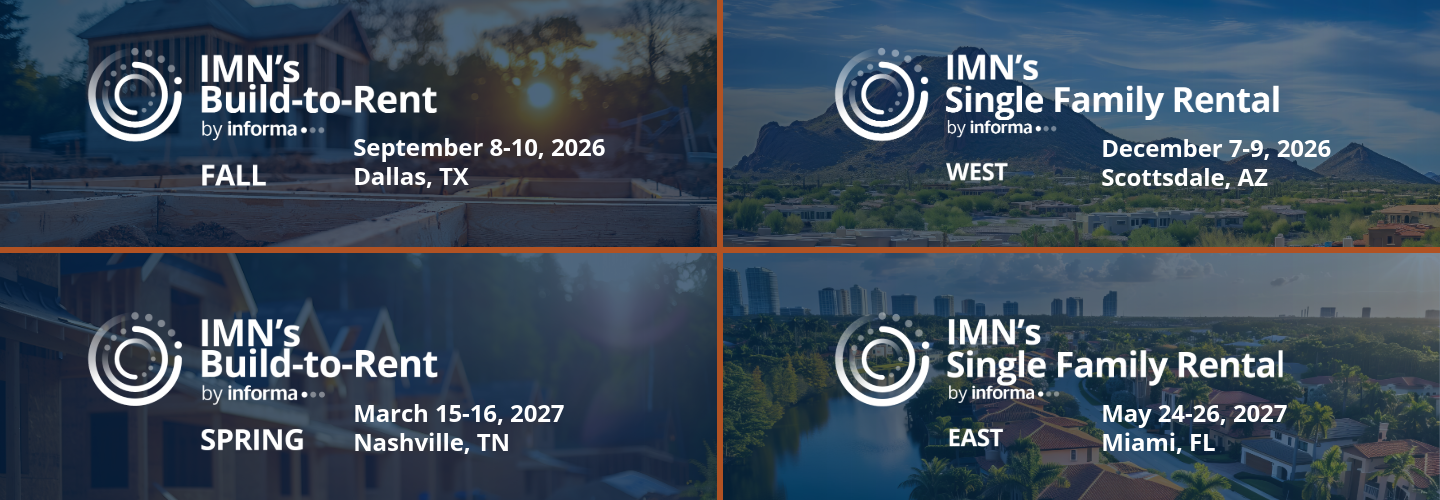
Want to dive deeper into these trends and connect with the operators shaping the future of SFR and BTR? Join us at our upcoming Build-to-Rent Fall Forum and Single Family Rental West Forum where industry leaders share insights, strategies, and real talk about what's working (and what's not) in SFR and BTR.
Insights from our recent panel at the Real Estate Private Funds Summer Forum featuring Matt Seskin (Island Capital), Chris Poston (Trilogy Investment Company), Doug Faron (Westlight Capital), and Dan Magder (Center Creek Capital Group), moderated by Alyson Harter (Burr & Forman).