
Workshops 30 November 2026 (Separate Ticket Required)
Conference & Exhibition 1-3 December 2026
SAFE Credit Union Convention Center, Sacramento, USA
2026 Keynote speakers
Keynote speakers

Karen Ross, Secretary of the California Department of Food and Agriculture.
Topic:
Keynote welcome address.
Bio:
Karen Ross is the Secretary of the California Department of Food and Agriculture (CDFA), a role she has held since 2011. With a deep background in agricultural advocacy and national food policy, she leads efforts to promote sustainable farming, food safety, and climate change adaptation across California’s agricultural industry.
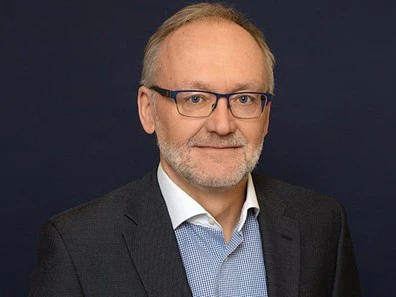
Achim Dobermann, Chief Scientist, International Fertilizer Association (IFA).
Topic:
The role of biostimulants for increasing nutrient use efficiency in global crop production.
Biography:
As Chief Scientist, Achim provides strategic scientific advice to IFA and its members on promoting responsible plant nutrition and enhancing nutrient stewardship worldwide. He served as Director & CEO of Rothamsted Research in the UK (2014-2019), Deputy Director General of the International Rice Research Institute (IRRI, 2008-2014), Professor of Soil Science and Nutrient Management at the University of Nebraska-Lincoln, USA (2000-2007), and as a Soil Nutrient Specialist at IRRI (1992-2000). He received his MSc in Tropical Agriculture and PhD in Soil Science from the University of Leipzig in Germany. Dr. Dobermann has over 35 years of field experience working in every region of the world on science and technology for sustainable farming, with particular emphasis on soil science, plant nutrition and agronomy. He has published on a wide range of agricultural issues and serves on the boards of iSDA.Ltd and Agrimetrics.Ltd, two startups working on data-driven solutions for agronomy and farming, as well as on several scientific advisory bodies worldwide.

Mark Tester, Prof. and Chair, Center of Excellence for Sustainable Food Security, KAUST.
Topic:
Scientific advances and research updates.
Biography:
Mark Tester is a Professor of Plant Science at KAUST, Chair of the Center of Excellence for Sustainable Food Security and co-Founder of RedSea LLC (now iyris). In 2019, he was Head of the Food Sector at NEOM. Prior to joining KAUST in February 2013, he was an ARC Federation Fellow and Professor of Plant Physiology at the University of Adelaide, Australia, where he established The Plant Accelerator. Previously, he was a Senior Lecturer at the University of Cambridge, U.K., where he also received his Ph.D. in 1988. Professor Tester is now focused on using plant science in combination with other technologies to increase sustainability of food production.
Professor Tester leads a research program on salinity tolerance in plants, and in delivering commercially the outcomes of that research in his private company, founded as Red Sea Farms (now iyris). His aspiration is to unlock seawater by developing a new economically viable agricultural system where salt-tolerant crops are irrigated with partially desalinized seawater or brackish groundwater. A particular strength of Professor Tester’s research program is the integration of genetics and genomics with a breadth of physiological approaches to enable novel gene discovery. In the process of delivering his research, Professor Tester developed a method for creating new types of hybrid allotetraploid rootstocks that enable the rapid stacking of multiple tolerance traits in crop plants. Patents covering this were published in 2024. The impacts of these rootstocks on yield in the field are considerable and his materials are now being adopted by some of the largest agricultural companies in the world. More recently, he has been able to support others in the delivery of their discoveries through his position as Director of the Center of Excellence for Sustainable Food Security.

Mariangela Hungria, Researcher, Embrapa.
Topic:
Microbial biostimulants and biofertilizers.
Biography:
Mariangela Hungria da Cunha is a Brazilian agronomist and microbiologist noted for pioneering work on biological nitrogen fixation (BNF) and the use of beneficial soil bacteria as microbial inoculants for tropical crops. Since 1982 she has been a researcher with the Brazilian Agricultural Research Corporation (Embrapa), helping farmers replace chemical fertilizers with beneficial soil bacteria. In 2025 she became the first Brazilian woman to receive the World Food Prize, for “extraordinary scientific advancements in biological nitrogen fixation” that transformed tropical agriculture.She is a member of the Brazilian Academy of Sciences.

Julian Schroeder, Distinguished Professor, Torrey Mesa Research Institute Chair in Plant Science at UC San Diego - School of Biological Sciences
Topic:
How plants respond to stress.
Biography:
Julian Schroeder did his PhD research at the Max Planck Institute for Biophysical Chemistry with Erwin Neher and was a Feodor von Lynen Humboldt Foundation postdoctoral fellow at UCLA School of Medicine. He received awards, including the Presidential Young Investigator Award (NSF), the ASPB Charles Albert Shull Award (1997), a DFG Heinz-Maier-Leibnitz Prize, the Blasker Award in Environmental Science, the ASPB Stephen Hales Prize (2021), an Alexander von Humboldt and Carl Friedrich von Siemens Research Prize (2022), is Churchill Overseas Fellow at Cambridge University (2019-) and with collaborators shared the Cozzarelli Prize from PNAS (2010) and a top 10 breakthrough of the year selected by Science (2009). He has served on several advisory boards, including Co-Director of the Food and Fuel for the 21st Century Center. He was von Humboldt Fellow at the TU Munich and the MPI for Biochemistry, visiting Professor at the ETH Zurich and is a member of the U.S. National Academy of Sciences, the German National Academy of Sciences - Leopoldina and Fellow of American Association for the Advancement of Science.

Patricio Grassini PhD Sunkist Endowed Professor in Agronomy , Department of Agronomy and Horticulture at University of Nebraska-Lincoln
Topic:
Exploring global yield gaps and why they matter.

Welcome message
In this short video, Conference Chair Patrick Brown spotlights a world-class line-up and why this year’s Biostimulants World Congress is the place for serious science.