In the rapidly evolving landscape of asset and wealth management, differentiation has become a critical factor for firms aiming to stay competitive.
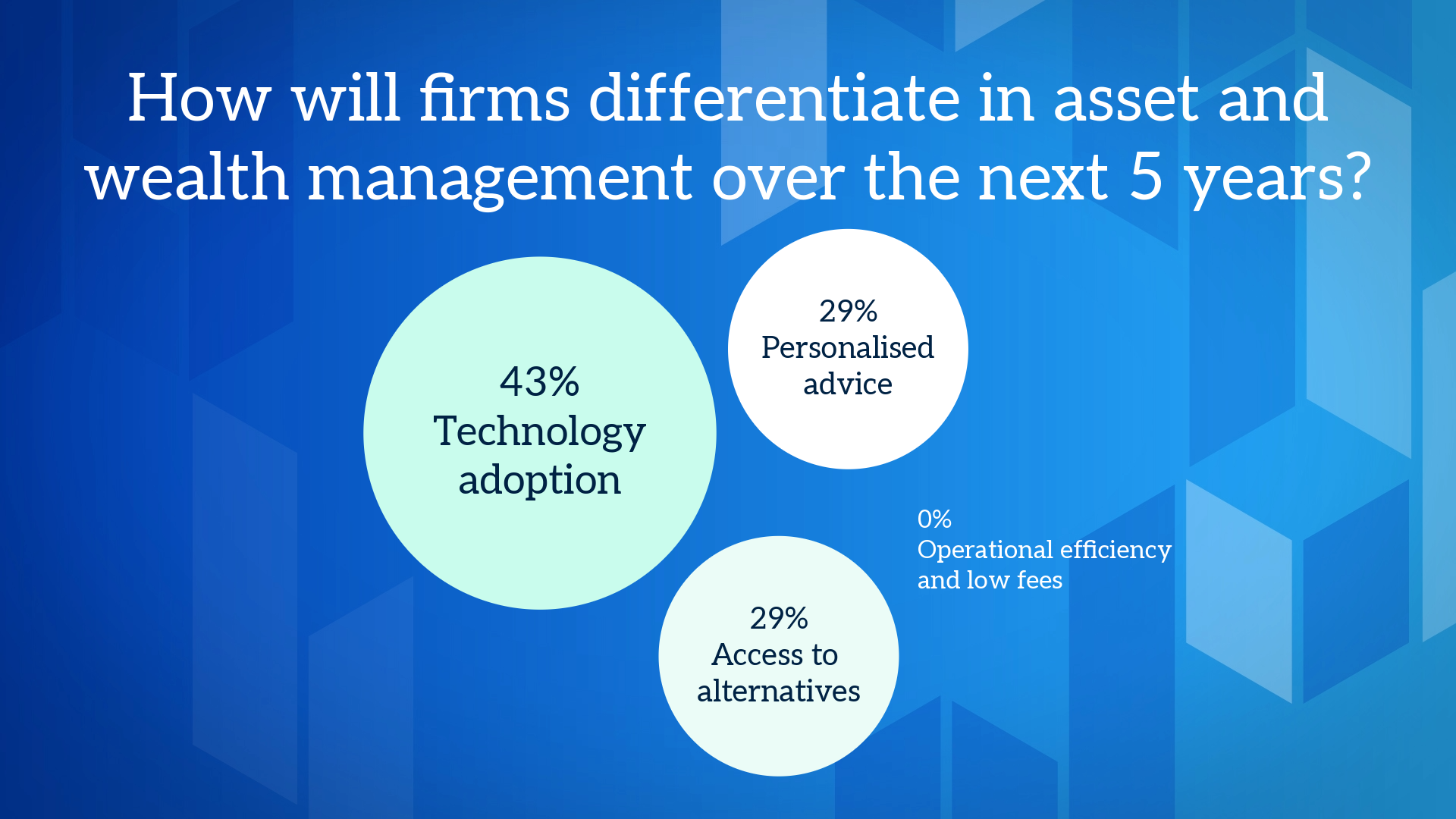
As client expectations grow and market dynamics shift, firms are exploring various strategies to stand out. A recent poll sheds light on how firms plan to differentiate themselves over the next five years. The results reveal a strong focus on technology adoption (43%), followed by more personalised advice (29%) and access to alternatives (29%), while operational efficiency and low fees received no votes (0%). These findings highlight the priorities shaping the future of the industry.
Technology adoption
Technology adoption emerged as the most significant factor, with 43% of respondents identifying it as the key driver of differentiation. This reflects the increasing reliance on digital tools, artificial intelligence, and data analytics to enhance client experiences, streamline operations, and improve decision-making. From robo-advisors to advanced portfolio management platforms, technology is enabling firms to deliver faster, more accurate, and more tailored solutions. The emphasis on technology also aligns with the growing demand for seamless digital interactions and real-time insights, particularly among younger, tech-savvy investors.
More personalised advice
Personalised advice ranked equally with access to alternatives, garnering 29% of the votes. This category underscores the importance of understanding individual client needs, preferences, and goals to deliver customised financial strategies. Personalisation goes beyond traditional segmentation, leveraging data and behavioural insights to create bespoke investment plans. As clients increasingly seek value-added services, firms that can provide tailored advice are likely to build stronger relationships and foster greater loyalty.
Access to alternatives
Access to alternative investments, such as private equity, hedge funds, real estate, and infrastructure, also received 29% of the votes. This reflects a growing trend among investors to diversify portfolios and seek higher returns in non-traditional asset classes. Firms that can offer exclusive access to these opportunities, along with the expertise to navigate their complexities, are positioning themselves as valuable partners in wealth creation.
Operational efficiency and low fees
Interestingly, operational efficiency and low fees did not receive any votes in the poll. While these factors remain important, they are increasingly seen as baseline expectations rather than differentiators. Clients now prioritise value-added services and innovative solutions over cost alone.
In conclusion, the poll results highlight a clear shift in the asset and wealth management industry. Firms are focusing on technology, personalization, and access to alternatives to differentiate themselves and meet the evolving needs of their clients. These priorities will likely shape the competitive landscape in the years to come.
Discover the future of asset and wealth management this June at FundForum!