The convergence of public and private markets could potentially be the biggest change for the investment industry in a generation, and the UK is no exception.
Key takeaways
- Over 1,450 companies have achieved unicorn status, with valuations over $1 billion, while private capital is around $16 trillion.
- US-domiciled interval funds, a type of semiliquid fund, have grown from $2.8 billion to $96.2 billion in the last decade.
- In the UK, while the LTAF market is immature, the AUM of FCA-approved LTAFs sits at around £5 billion, with an additional £3 billion in committed capital.
- 17 key players in the UK workplace pension space have committed to increasing private market allocations, with roughly £252 billion of assets subject to this initiative.
- While private trusts have been publicly available in the UK for over 50 years, they've grown from £19 billion to £45 billion in the last 5 years alone, a 136% increase.
The state of play in Private Markets
The number of publicly traded companies in the US has declined from around 7,000 in 1998 to just over 4,000 today. Meanwhile, almost 1,450 private companies have achieved the coveted "unicorn" status, with valuations in excess of $1 billion. It's no wonder then that private markets are very much in vogue, as more retail investors seek access to private equity and private credit.
And this demand is reflected in the data. PitchBook research shows private capital is in the neighbourhood of $16 trillion, with $4 trillion of that total figure classed as "dry powder." As Morningstar strategist Dan Lefkovitz says, it's "now common for institutional asset owners to allocate 15%, 20%, or even 30% of their portfolios to private market investments." But despite the explosion of popularity, caveat emptor still applies, as private market funds are known for high fees, illiquidity, and opacity, while diversification and performance benefits can be exaggerated.
But how do you bridge the gap between public and private markets? One fast-growing area investors are flocking to is semiliquid funds.
The rise and rise of semi-liquid funds
Laura Lutton, Morningstar's global head of manager research, notes that semiliquid funds have skyrocketed in the last decade, with US-domiciled interval funds growing from $2.8 billion to $96.2 billion, while 70 new funds were launched in the past two years.
Semiliquid funds hold private securities but are registered with regulators and required to disclose their holdings, fees, and performance. They're available in different structures, including tender-offer funds, nontraded business development companies (BDCs), nontraded real estate investment trusts (REITs), accredited investor funds, European long-term investment funds (ELTIFs), and long-term asset funds (LTAFs).
Private, popular, and pricey
While semiliquid funds have been hailed for democratising access to private markets, their eye-watering fees and complex structure mean they're very much still a premium investment vehicle.
The average annual report net expense ratio for semiliquid funds was 3.16% as of their latest disclosed reports, compared to just 0.37% for passive mutual funds and ETFs, and 0.97% for actively managed funds. Naturally, investors paying premium fees will expect premium returns.
Importantly, semiliquid funds often charge incentive fees, sometimes called performance fees, which can match or even surpass management fees. The "incentive fee" is a percentage of the fund's return that the fund company earns if the fund clears its "hurdle rate." Once the fund clears this hurdle, the incentive fee is applied to the whole return, not just the amount above the hurdle rate.
With all this in mind, how will the convergence of public and private markets play out in the UK?
Private Markets and the UK
LTAFs and ISAs
It's been a busy year for the UK market. In July 2025, Chancellor of the Exchequer, Rachel Reeves, announced that from 2026, LTAFs can be included in stocks & shares ISAs. This has the potential to turbocharge LTAFs' AUM growth via retail channels, which should, in theory, lead to some progress in terms of platform availability of LTAFs.
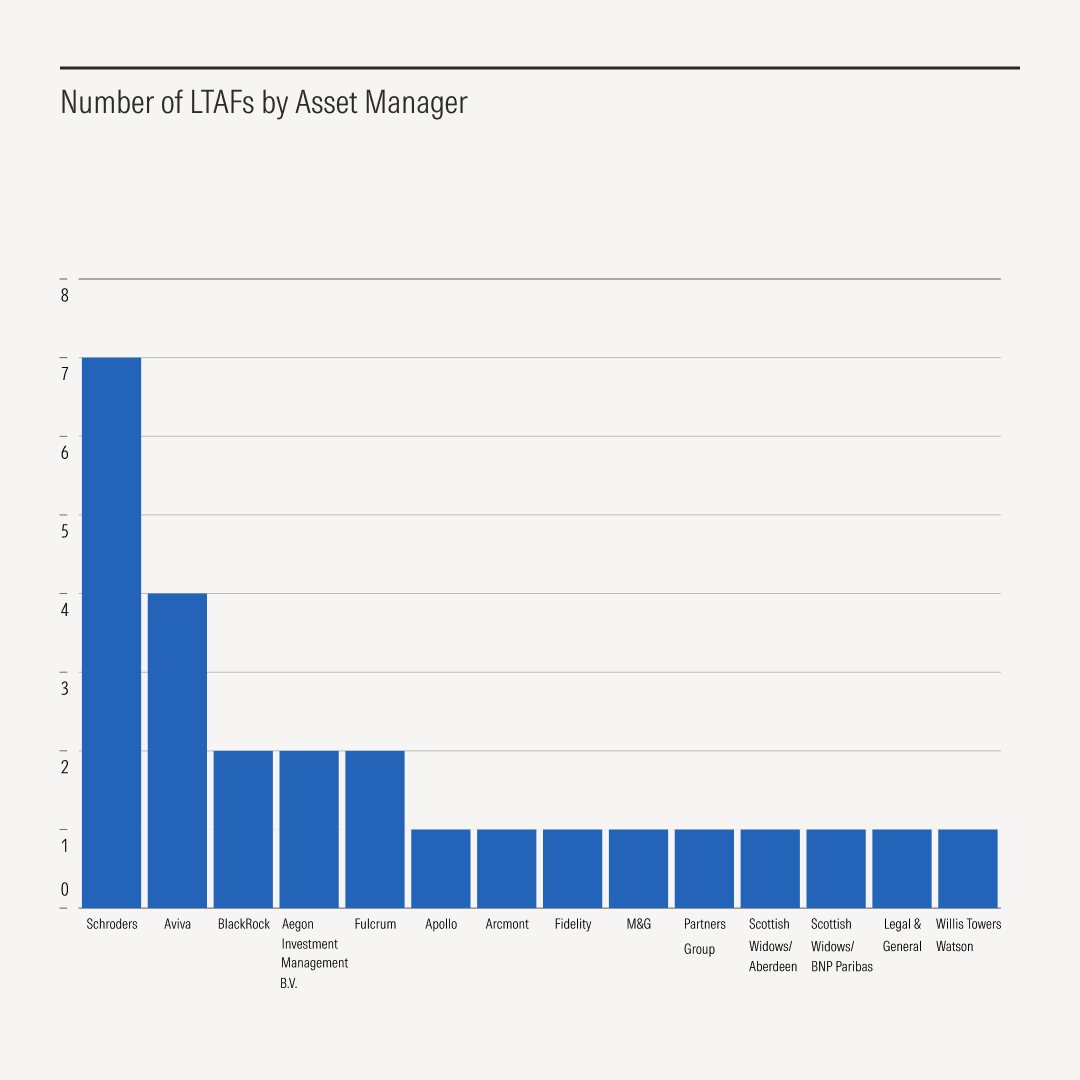
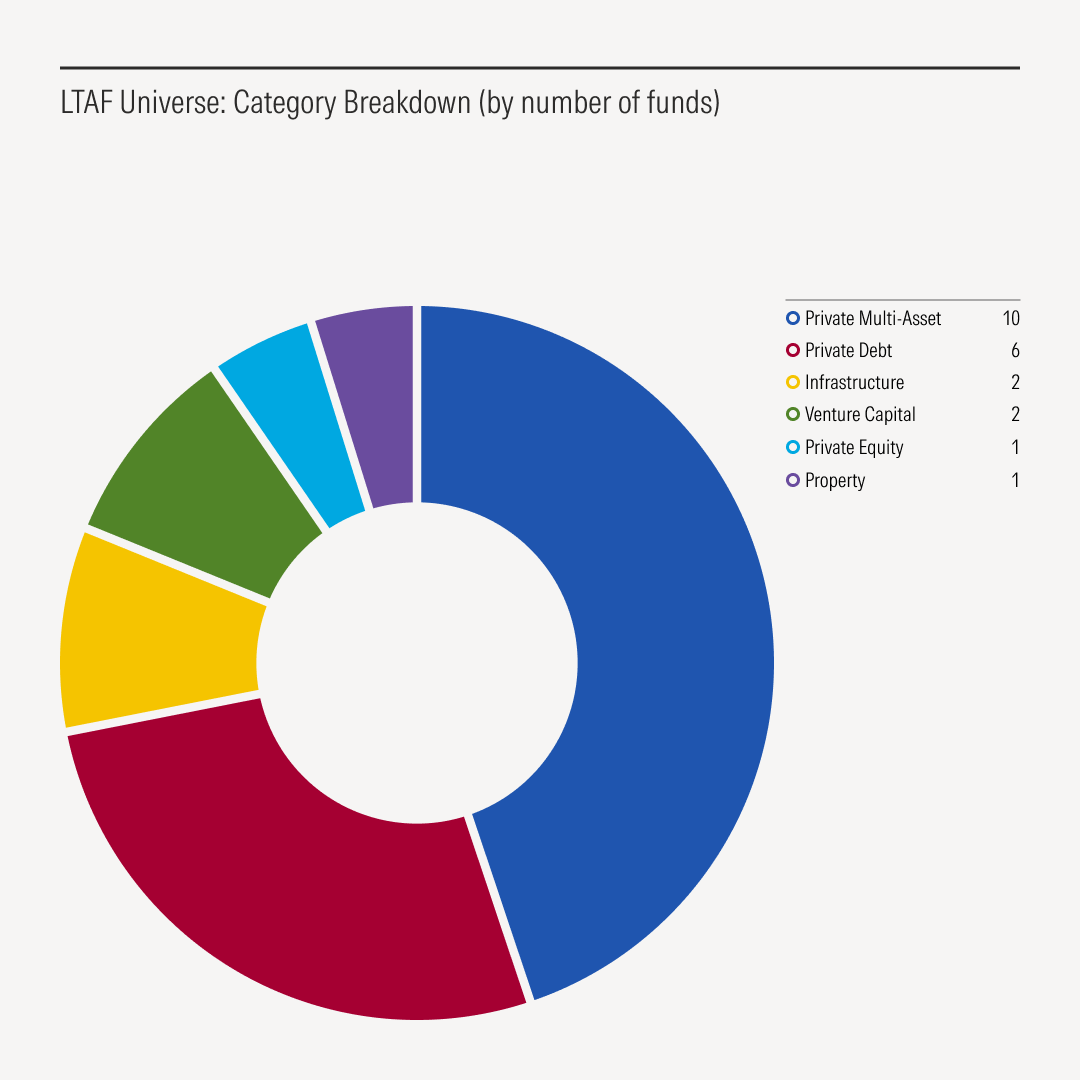
Morningstar data shows the current AUM of FCA-approved LTAFs sits at around £5 billion, with an additional £3 billion in committed capital. But the LTAF market itself is still immature, with around 20 strategies for sale in the UK, though this figure is expected to increase. Because of their complex nature, the LTAF market is currently dominated by a few large-scale asset managers hoping to capture market share, including Schroders, Aviva, BlackRock, and Fidelity.
Morningstar's Senior Analyst, Evangelia Gkeka, notes that LTAF-curious investors need to conduct thorough due diligence, and consider:
- Terms and liquidity: LTAFs must invest at least 50% of their assets in unlisted securities and other long-term assets, while another part of the fund must be invested in liquid assets. LTAFs are subject to a notice period for redemptions of at least 90 days, and investors can only redeem units once per month. Additionally, fund managers can suspend redemptions, preventing investors from accessing their capital.
- Expectations: While investors may be tempted by the allure of high returns, LTAFs are hybrid funds which hold liquid assets, including cash. So, returns are diluted, and investors only partially capture the potential attractive upside of illiquid assets.
- Fee structure: Apart from management fees, some LTAFs may charge carried interest, alongside indirect fees to the underlying fund investments, such as third-party funds.
- Valuation: While the liquid component of an LTAF is easy to value, the private part is more difficult, as private assets are not traded, and therefore, there is no publicly available data. The FCA recommends working with an independent third-party during the valuation process, but many LTAF managers rely on their own internal valuation committees, so investors need to check that robust processes are in place, and that valuation committees are transparent and independent from investment teams.
Public meets private meets pensions?
In May 2025, the UK government announced the "Mansion House Accord," a voluntary initiative designed to boost pension providers' alternative allocations to 10% of assets, or £50 billion. 17 key players in the workplace pension space, including Aviva, M&G and Royal London, have committed to the scheme, with roughly £252 billion of assets subject to the initiative.
According to PitchBook, half of the allocations will focus on UK investments, potentially funnelling £25 billion into the UK economy over the next six years. Research shows that private capital makes an annual economic contribution of almost £200 billion to the broader British economy, equivalent to 7% of GDP.
While the initiative was originally slated to be voluntary, the government later introduced the UK Pensions Schemes Bill in June, which proposes giving regulators the power to mandate the default funds of workplace defined-contribution (DC) schemes if the 10% allocation is not voluntarily met. However, some argue the mandate could lead to a breach of a pension fund's fiduciary duty.
But, in a setback to the government, on March 19, 2026, 217 members of the House of Lords voted in favour of amending the Pension Schemes Bill to remove the government's power to mandate where defined-contribution pension schemes invest. 113 members voted against the amendment.
Private Equity trusts: Is the proof in the performance?
Private equity investment trusts offer access to private assets that aren't normally easily available to individual investors. They trade on the London Stock Exchange like ordinary company stocks but typically hold unlisted or early-stage companies.
While these private trusts have been publicly available in the UK for more than 50 years, they're still mainly held by institutional investors. Individual investors account for just 9% of ownership, compared to mainstream asset classes like global equities and UK equity income, where individual ownership is around 50%. UK-listed private trusts have grown significantly over the last five years, up 136% from £19 billion to £45 billion.
But the performance shows mixed returns. Out of the 25 private trusts listed on the LSE, Morningstar journalists analysed 18 with a 10-year return history and found:
- The six largest trusts saw their investments grow by double-digit percentages for the past 10 years, with few negative annual returns.
- The best-performing trust, 3i Group, returned 26% on an annualised basis over 10 years.
- Of the 18 trusts, 12 beat the category average, while 7 beat the Morningstar Global Markets Index.
- Six of the trusts measure performance against the FTSE All-Share, and five of them beat the FTSE All-Share's 7.62% annualised gain over the last decade.
Looking at a 20-year investment horizon, performance figures for private trusts are stronger, though the dataset is smaller. But context is key, and returns should be viewed through the lens of an era dominated by low interest rates, which lasted from the end of the global financial crisis to the end of 2021.
Morningstar. Where data speaks Private Markets
The convergence of public and private markets has pushed investors into new territory over the last decade. With private investments now accessible to a broader range of investors, the demand for transparent, data-driven insights has never been higher, and the need for transparency and analytical tools is critical.
That's why we've launched the Morningstar Medalist Rating for Semiliquid Funds, available in Morningstar Direct. Our transparent rating system follows three steps:
- Compute a weighted score from analyst-rated Process (50%), People (25%), and Parent Pillars (25%).
- Systematically adjust the score using fee ranks.
- Assign the Medalist Rating using a rules-based table, allowing for committee discretion when necessary.
The result is a clear fund rating that turns noise into signal, brings clarity and confidence to a complex space, and empowers investor success.