Posted by IMN on 28 July 2026
Where smart money is going in multifamily real estate this year

The multifamily housing sector is entering a pivotal phase in 2026 as new apartment deliveries moderate after years of record-breaking construction activity. This cooling supply pipeline doesn't signal weakening fundamentals, rather, it reflects a market that has become increasingly discerning about geography, with stakeholders now prioritizing markets based on supply constraints, affordability dynamics, migration patterns, and economic growth. As institutional capital continues flowing into the sector and demographic shifts reshape demand patterns, identifying which regions offer the strongest fundamentals can determine investment success or failure, and recent polling data reveals a clear consensus among industry professionals about where opportunity lies.
Poll results
A recent LinkedIn poll asked which region is 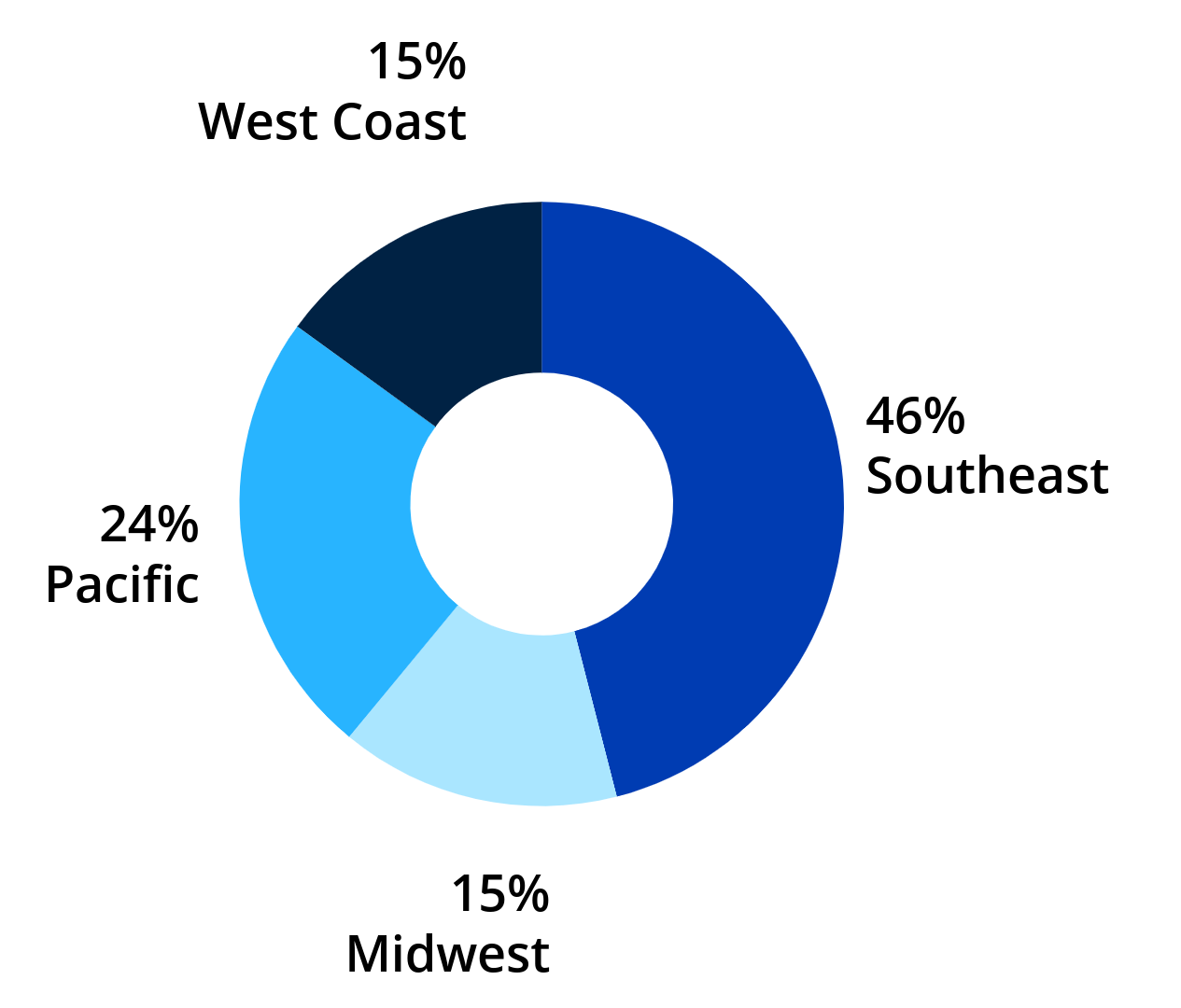 winning the multifamily race in 2026 and industry respondents showed a decisive preference:
- Southeast: 46%
- Pacific Northwest: 24%
- Midwest: 15%
- West Coast: 15%
The Southeast's commanding lead, reflects a fundamental shift in how the multifamily industry evaluates opportunity.
Understanding the regional categories
Southeast: This region typically encompasses states including Florida, Georgia, North Carolina, South Carolina, Tennessee, Alabama, and parts of Virginia. Major multifamily markets include Atlanta, Charlotte, Raleigh-Durham, Nashville, Tampa, Orlando, and Miami. The region has experienced substantial population growth over the past decade, driven by both domestic migration and international immigration.
Pacific Northwest: Primarily consisting of Washington and Oregon, this region includes major markets such as Seattle, Portland, and their surrounding metropolitan areas. The region has historically benefited from technology sector growth and quality-of-life factors that attract educated workers.
Midwest: This broad region spans states including Ohio, Michigan, Illinois, Indiana, Wisconsin, Minnesota, and Missouri. Key multifamily markets include Chicago, Minneapolis-St. Paul, Columbus, Indianapolis, and Kansas City. The Midwest has traditionally offered more affordable housing options compared to coastal markets.
West Coast: Encompassing California primarily, this region includes high-value markets such as Los Angeles, San Francisco, San Diego, and the San Jose/Silicon Valley area. The West Coast has historically commanded premium rents but faces affordability challenges and regulatory complexity.
Why the Southeast is leading
The Southeast's dominant position in the poll reflects several converging factors that have reshaped multifamily fundamentals in recent years.
Migration patterns continue favoring the region. States like Florida, Texas (often grouped with Southeast markets), North Carolina, and Tennessee have consistently ranked among the top destinations for domestic migration. This population influx directly translates to housing demand, creating sustained occupancy pressure even as new supply enters the market.
Affordability dynamics play a significant role. While the Southeast has experienced rent growth, housing costs in major markets like Atlanta, Charlotte, and Nashville remain substantially below those in coastal markets. This affordability advantage attracts both residents and employers, creating a self-reinforcing cycle of economic and population growth.
Business-friendly environments in many Southeast states have attracted corporate relocations and expansions. Major companies have established significant operations in the region, bringing employment growth that supports multifamily demand. The presence of diverse economic drivers—from technology and finance to logistics and healthcare—provides stability across market cycles.
Supply-demand balance varies by market within the region, but many Southeast metros have absorbed new construction effectively. While some markets face near-term oversupply concerns, the underlying demand fundamentals remain strong enough to support expectations of stabilization and recovery.
The Pacific Northwest's second-place position
The Pacific Northwest's 24% showing reflects recognition of the region's resilient fundamentals despite recent challenges. Seattle and Portland have experienced technology sector volatility and work-from-home impacts, but both markets maintain strong long-term demographic and economic foundations.
The Midwest and West Coast tie
The equal 15% showing for both the Midwest and West Coast reveals different narratives for each region.
The Midwest's positioning reflects its role as an affordability play. Markets like Columbus, Indianapolis, and Minneapolis offer stable fundamentals and attractive entry points for value-oriented investors. However, the region generally lacks the high-growth dynamics that characterize the Southeast, limiting its appeal for investors prioritizing rent growth and appreciation potential.
The West Coast's third-place tie represents a significant shift from historical patterns when California markets dominated multifamily investment activity. Affordability challenges, regulatory complexity, high construction costs, and outmigration have tempered enthusiasm. However, the region's economic diversity, high-income demographics, and supply constraints prevent it from being dismissed entirely.
The path forward for multifamily stakeholders
The poll results underscore a fundamental shift in multifamily strategy: success in 2026 requires geographic precision, with broad-based national approaches giving way to targeted regional focus. The Southeast's commanding lead reflects not just current performance but expectations about where long-term growth will concentrate, suggesting continued capital flow to these markets.
Real estate markets are cyclical and today's winners can become tomorrow's challenges if supply overwhelms demand or economic conditions shift. The Pacific Northwest, Midwest, and West Coast each offer distinct value propositions that may resonate differently depending on investment objectives and time horizons. What remains clear is that location selectivity has become paramount, understanding regional nuances from migration patterns and affordability to supply pipelines and economic drivers will separate successful strategies from underperforming ones.
To stay ahead of these evolving market dynamics and gain deeper insights into regional opportunities, join us at our multifamily conferences across the United States and Canada. These industry events provide essential networking, market intelligence, and strategic perspectives that can inform your investment decisions and keep you at the forefront of this rapidly changing sector.
Upcoming events
Pacific Northwest Middle-Market Multifamily | August 26-27, 2026 | Seattle, WA
Canadian Apartment Investment | September 9 | Toronto, Canada
Southern California Middle-Market Multifamily | September 15-16, 2026 | San Diego, CA
Carolinas Middle-Market Multifamily | October 13-14, 2026 | Charlotte, NC
Quebec Apartment Investment | February 11, 2027 | Montreal, Canada
Florida Middle-Market Multifamily | March 23-24, 2027 | Coral Gables, FL
Western Canada Apartment Investment | April 6, 2027 | Vancouver, Canada
Texas Middle-Market Multifamily | April 27-28, 2027 | Dallas, TX
Southeast Middle-Market Multifamily | May 28-29, 2027 | Atlanta, GA