
Main Conference: 28-30 April 2026 | Vienna, Austria
Cell Culture & Upstream Processing
Intensifying upstream processes and de-risking scale-up with digital tools.
Go Beyond Theory in Upstream Manufacturing
The Cell Culture & Upstream Processing track is a 3-day program focused on boosting productivity and robustness from the bioreactor. This track delivers practical case studies on implementing N-1 perfusion, leveraging smart PAT tools like Raman, and de-risking the tech transfer journey from the bench to 20,000L. Hear from global leaders on how they are optimizing media and scaling processes for complex modalities like AAV and antibody-based therapies.
Session Spotlight: Cell Culture & Upstream Processing
CASE STUDY: From Months to Weeks - Slashing Timelines with an In Silico Upstream Digital Twin
Tuesday 28th April 2026 11:45am
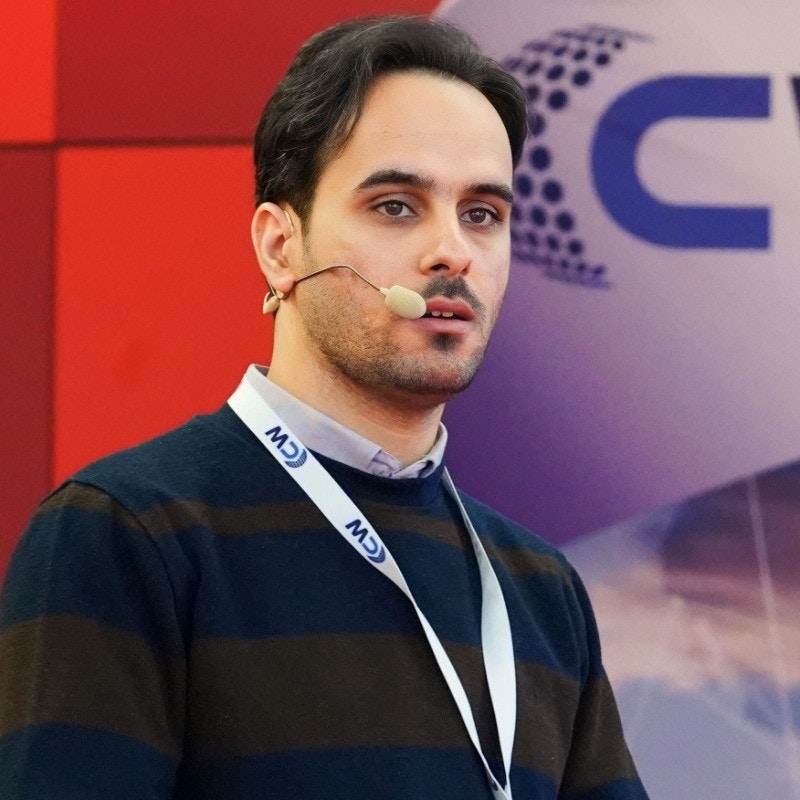
Alireza Ehsani, Senior Data Scientist - Upstream Process Development at Boehringer Ingelheim
- Development of a hybrid model to create a highly predictive digital twin of a CHO cell fed-batch process
- Reduction of required physical lab experiments
- Implementation of a clear roadmap to validate and qualify digital twin for use in a GMP environment
- Results seen, lessons learned.
Track Themes: A Blueprint for Upstream Excellence
Scale-Up & Tech Transfer
Get proven strategies for robust scale-up to 20,000L and learn how to successfully de-risk tech transfer to external partners and CDMOs.
The Smart Bioreactor
Go inside the smart bioreactor and see how leaders are using in-line PAT like Raman and in silico digital twins to enable predictive, real-time process control.
Media & Intensification
Learn how to supercharge your existing facility with N-1 perfusion and optimize your chemically defined media and feed strategies using predictive modelling.
Mastering Complex Modalities
Move beyond mAbs and discover the unique upstream process development strategies required for drug delivery vectors like exosomes and AAV, as well as antibody-based modalities like ADCs.
Innovators Sharing Upstream Excellence
Learn directly from the technical experts and process development leaders who are intensifying and digitizing upstream manufacturing.
Explore the full Cell Culture & Upstream Processing Agenda
Cell Culture & Upstream Processing: Q&A & Expert Insights
What strategies are used to scale up bioprocesses to 20,000L?
Scaling to 20,000L requires robust strategies to overcome differences in mixing and oxygen transfer. Approaches include using Computational Fluid Dynamics (CFD) and "evolutionary AI" to design lab-scale bioreactors that physically mimic large-scale hydrodynamic conditions. This enables predictive scale-down testing, allowing engineers to identify risks like nutrient gradients or shear stress before expensive pilot trials.
How can in silico modelling optimise cell culture media?
Hybrid modelling combines data-driven insights with mechanistic equations to optimise fed-batch media formulations in silico. This approach helps define the optimal balance of amino acids and nutrients to maximise titre and manage metabolites (like lactate), reducing the need for extensive wet-lab experiments and accelerating process development.
How do you overcome clarification bottlenecks in high-density cell cultures?
Intensified upstream processes often produce high-titre, high-solids harvests that challenge traditional clarification. Next-generation strategies include novel filtration and centrifugation technologies designed specifically for high-density harvests, ensuring efficient primary recovery without compromising yield or fouling downstream filters.
What are the advantages of transitioning AAV production to suspension culture?
Moving from adherent systems to high-density suspension processes is critical for commercial AAV manufacturing. Suspension cultures are more scalable and robust, allowing for better control over triple-transfection efficiency and viral particle yield. Optimisation strategies often involve perfusion to improve the full-to-empty capsid ratio.