Main Conference: 28-30 April 2026 | Vienna, Austria
Digital Biomanufacturing & Data-Driven Operations
Building the smart factory by integrating data and implementing AI-driven digital twins.
Go Beyond Theory on Biopharma 4.0
The Digital Biomanufacturing & Data-Driven Operations track is a 3-day roadmap to building the fully connected, AI-driven 'smart factory'. This program moves past the buzzwords and provides practical case studies on validating AI/ML in a GMP environment , building trustworthy digital twins , implementing real-time PAT , and overcoming the foundational challenge of data harmonisation. Learn from the leaders who are turning data into decisions.
Session Spotlight: Digital Biomanufacturing & Data-Driven Operations
From Data to Decisions: AI vs. ML in Bioprocess Optimization – Showcases and Solution Paths
Tuesday 28th April 2026 11:45am
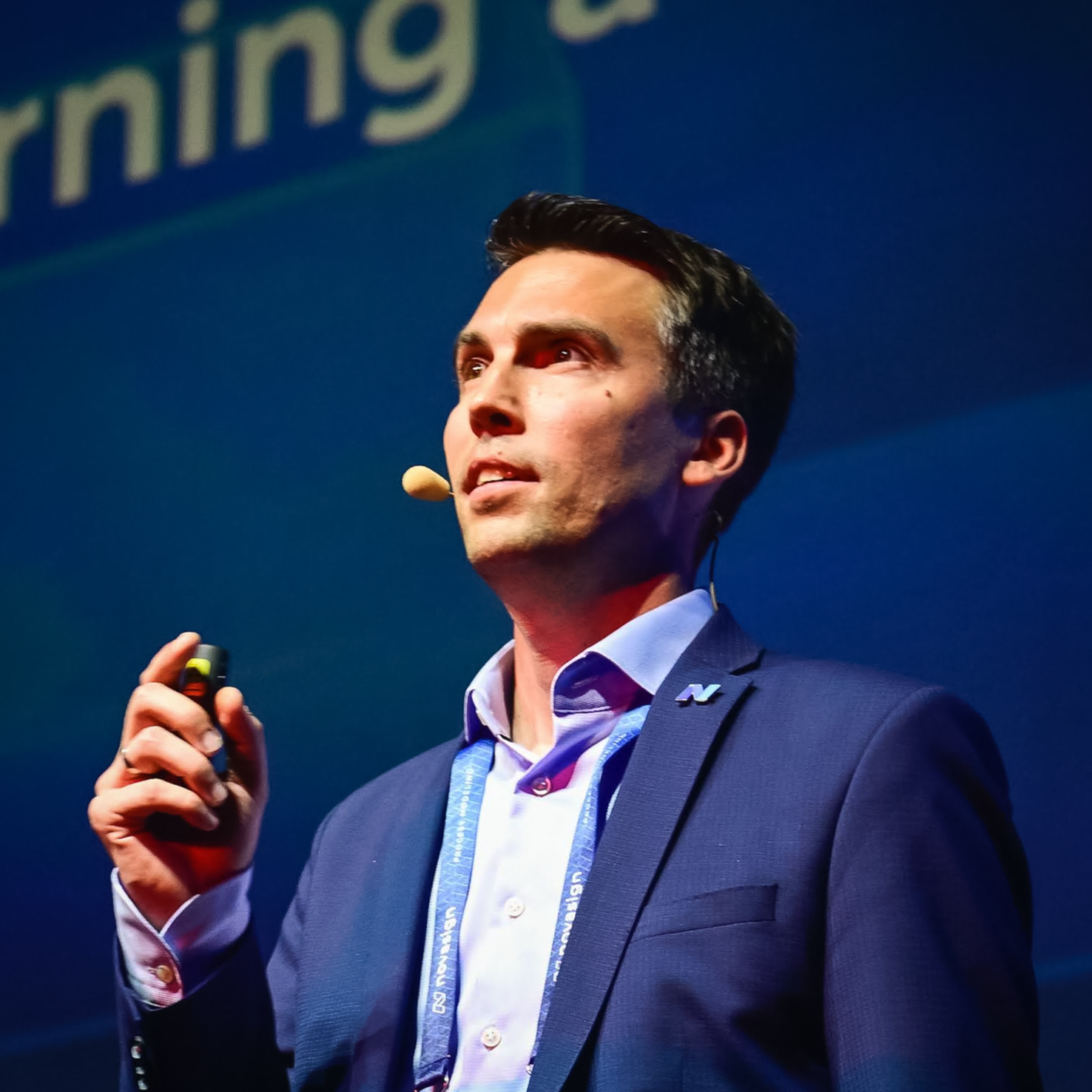
Dr. Mark Duerkop, Chief Executive Officer at Novasign
This presentation explores how Artificial Intelligence and Machine Learning contribute differently to modern bioprocess optimization. Five industrially relevant showcases will be discussed - spanning upstream and downstream processes, from monoclonal antibodies to viral vectors, and from small-scale development to manufacturing scale. Emphasis will be placed on the digital transformation journey from manual development work toward fully autonomous biomanufacturing, highlighting solution paths that enable faster, more consistent, and intelligent process optimization across the product lifecycle.
Track Themes: A Blueprint for the Smart Factory
The Data Bedrock
Get a practical roadmap for data harmonisation, standardisation, and governance to create a "single source of truth".
AI/ML in GMP
See real-world case studies on validating AI and ML models in a GMP environment and using them to optimize processes across the product lifecycle.
Predictive Digital Twins
Go from in silico optimisation to real-time control by leveraging hybrid, physics-informed digital twins.
PAT & Next-Gen Paradigms
Learn how to implement PAT tools and look to the future with sessions on "self-driving labs," AI governance , and crucial lessons from other regulated industries.
Data-Driven Trailblazers Sharing Their Insights
Explore the full Digital Biomanufacturing & Data-Driven Operations Agenda
Digital Biomanufacturing & Data-Driven Operations: Q&A
Why is data harmonisation essential for digital transformation?
Biopharma facilities often struggle with data silos created by legacy systems. Data harmonisation involves implementing standardisation to create a "single source of truth" for process data. This is a prerequisite for applying advanced analytics and AI/ML to optimise processes and overcome roadblocks in digital transformation.
How do "Digital Twins" support bioprocess development?
Digital twins, particularly those driven by physics-informed AI, provide trustworthy virtual representations of the bioprocess. They move beyond "black box" models to allow for in silico optimisation and real-time process control, enabling engineers to predict process behaviours and reduce the number of physical experiments required for scale-up.
What are the regulatory considerations for AI in GMP environments?
Validating AI/ML for GMP use is a major challenge. Companies must navigate regulatory risks by ensuring data integrity and model explainability. Emerging AI governance frameworks are helping the industry establish "moral compasses" and compliance strategies (such as privacy and data security) to meet the expectations of regulators like the EMA and FDA.
How does real-time PAT enable active process control?
Integrating Process Analytical Technology (PAT), such as in-line Raman spectroscopy, allows for the real-time monitoring of Critical Process Parameters (CPPs). This data stream enables active process control and feedback loops, reducing batch variability and ensuring consistent product quality compared to traditional offline sampling.