The integration of private markets into wealth portfolios has emerged as a defining trend in asset and wealth management, reflecting a broader shift in how investors seek diversification, enhanced returns, and access to alternative asset classes.
Traditionally reserved for institutional investors, private markets – encompassing private equity, private debt, real estate, and infrastructure – are increasingly accessible to wealth management clients. This evolution is driven by factors including low interest-rate environments, the search for yield, and the maturation of private market structures that accommodate smaller ticket sizes and improved liquidity solutions.
Recent poll results reveal strong confidence in the continued expansion of private markets within wealth portfolios, with 62% of respondents indicating that allocations will increase. This substantial majority suggests that wealth managers and their clients view private markets as a core component of portfolio construction rather than a peripheral allocation. The drivers behind this optimism include the potential for higher risk-adjusted returns, lower correlation with public markets, and access to growth opportunities in private companies that remain outside traditional equity markets.
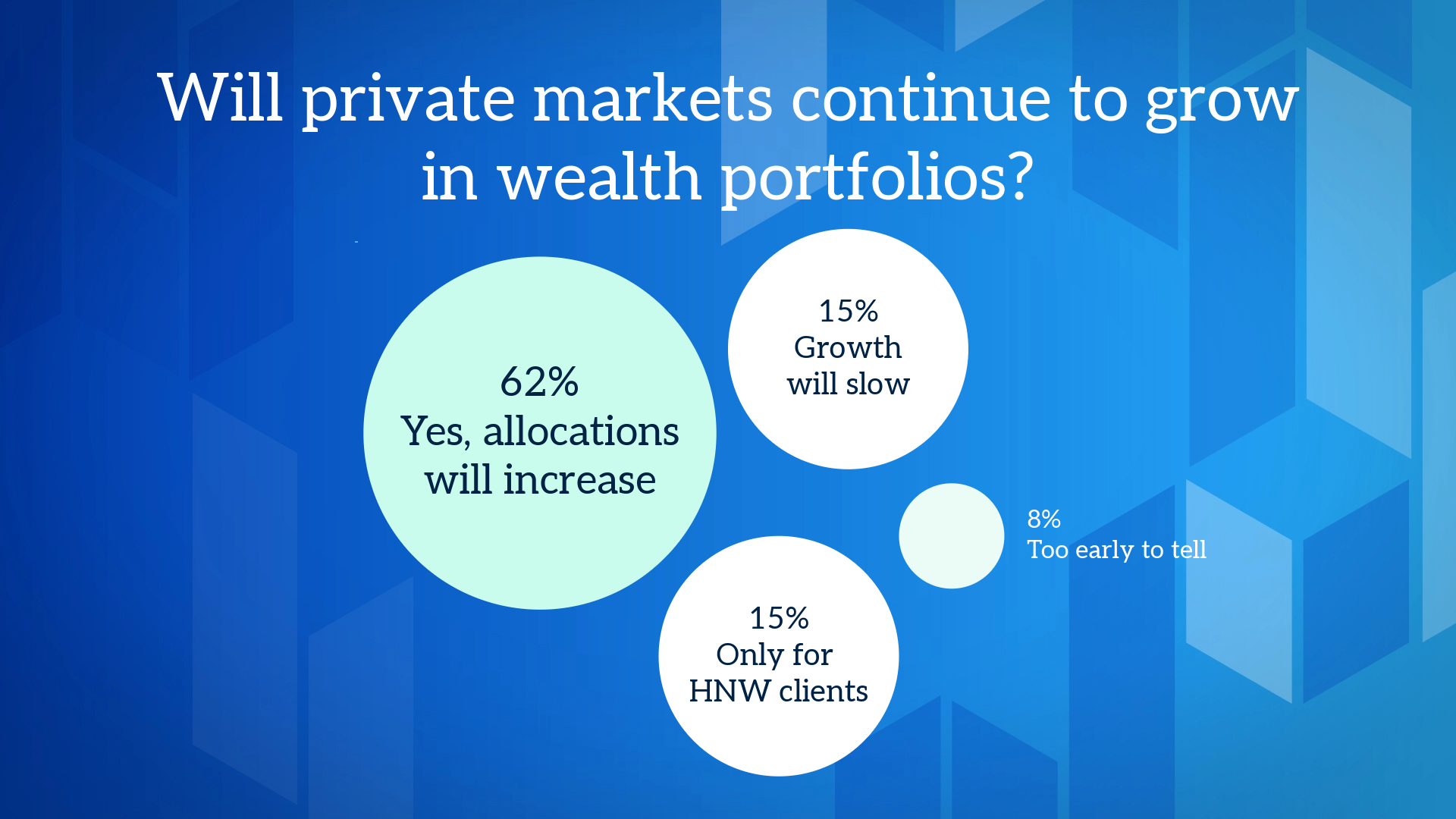
However, 15% of respondents believe that growth will slow, signalling caution about the pace of expansion. This perspective may reflect concerns about valuation levels in private markets, the complexity of due diligence, operational challenges in managing illiquid assets, or regulatory considerations that could temper enthusiasm. A slowdown does not imply contraction but rather a more measured approach to allocation increases as the market matures.
An equal 15% of respondents indicated that private market growth will be concentrated among high-net-worth (HNW) clients specifically. This view acknowledges that despite democratisation efforts, private markets remain best suited for investors with longer time horizons, higher risk tolerance, and the financial capacity to absorb illiquidity. HNW clients typically meet the regulatory and practical thresholds required for private market investments, including minimum investment amounts and accredited investor status.
Finally, 8% of respondents selected "too early to tell," reflecting uncertainty about market conditions, regulatory developments, or the long-term performance of private market strategies in wealth portfolios. While trends appear favourable, the sustainability of growth depends on factors including economic cycles, exit environments, and the ability of wealth platforms to effectively deliver private market access.
The poll results underscore a clear directional trend: private markets are becoming embedded in wealth management strategies, with the majority anticipating continued allocation growth across client segments.
Explore the future of investment strategies at the Private Markets Summit, part of FundForum.