

Greenbuild 2026 Summit
Designing for Resilience in an Era of Climate and Disaster Risk
Tuesday, October 20, 2026, at the Javits Center

Building a resilient future
Climate risks are transforming how cities, communities, and businesses plan, invest, and build. This Summit will help you decode the demand signals driving resilience, understand how markets and institutions are responding, and anticipate how standards of care and professional practice are evolving.
Attendees will gain practical guidance on responding to the expanding landscape of resilience frameworks and tools, and learn from real-world case studies demonstrating integrated decarbonization and resilience strategies across new construction, retrofits, and post-disaster reconstruction.
Summit sessions
Welcome and Ice Breaker
Resilient NYC: Making Progress
New York City’s approach to climate resilience has evolved significantly since PlaNYC first identified flood and heat risk in 2007. Events including Hurricane Sandy in 2012 and Hurricane Ida in 2021 as well as persistant high heat summers have reinforced the vulnerability of the city’s buildings - and the people and businesses who occupt them - to climate risks today and into the future. This session examines how flood resilience, heat mitigation, and passive survivability are being incorporated into New York City’s built environment alongside Local Law 97’s decarbonization requirements, with perspectives from public institutions and private real estate stakeholders on the policies, funding mechanisms, and regulatory drivers shaping that work.
Global Priorities for Built Environment Resilience
This session convenes regional leaders from GBCI’s global Market Transformation and Development team to examine how built environment resilience is being defined, operationalized, and prioritized across distinct global contexts. Each speaker will offer a framing of regional resilience trajectories, highlighting how hazard profiles, regulations, insurance market signals, and investment conditions are shaping approaches to risk management and adaptation in their region.
A moderated discussion will explore the underlying drivers influencing investment in resilience, including the role of climate policy, financial risk disclosure, and building performance frameworks such as LEED v5, as well as how these forces are translating into development decisions on the ground. The session will conclude with forward-looking insights on how regional market dynamics are expected to evolve and what this implies for the practice of resilient design.
Unlocking Investment for Adaptation and Resilience
The economic case for climate adaptation and resilience is well established. Numerous studies have shown that investments in resilience can yield significant returns through avoided losses, including physical damage, business interruption, and community impacts. Physical climate risk data and tools are increasingly informing planning and decision-making by local governments and communities, and in commercial real estate. Yet, despite growing awareness of climate risk, adaptation finance still represents less than 10% of total global climate investment (ref: WRI), and only a small fraction of adaptation finance currently comes from the private sector (ref: IMF).
The challenge is not that the public and private sector fail to understand risk – it is that the market has not developed the tools needed to translate the value of resilience into financial decision-making and transactions that can mobilize investment at scale.
This session explores this misalignment through the perspectives of key resilience beneficiaries operating at different scales, including real estate investors, insurers, and local governments. It will explore the following types of questions across these stakeholder groups:
- What financial and/or economic benefits drive action on resilience within your sector?
- What barriers persist to investing in risk reduction despite growing awareness of climate and its materiality?
- What solutions are emerging and what additional tools are needed to bridge current gaps?
- Who holds the responsibility of investing in resilience across property and community scales, and across public and private sectors?
The Evolving Standard of Care for Resilient Design
The building industry is undergoing a rapid transformation in how it approaches resilience, in many ways analogous to the early evolution of the green building movement before it became more formalized in practice. Although the market for physical climate risk products and services has grown substantially in recent years, it remains fragmented, offering a wide range of risk assessment and resilience design methodologies, with limited transparency, coordination or consistent performance metrics.
Meanwhile, architects and engineers are facing increasing expectations and professional risk related to the Standard of Care in an environment where building regulations are not keeping pace with changing physical risk. This session will feature the experiences and perspectives of leading practitioners working in resilience design today to discuss how they engage clients in defining resilience objectives and making the case for investment, what tools and approaches they rely on in the absence of formalized industry standards, how resilience is reshaping professional roles and qualifications within design teams, and what broader upskilling is needed across the industry to deliver this work effectively and at scale.
Scalable Solutions to Adapt Existing Affordable Housing
Resilience and affordability are often perceived as being in tension, as “beyond code” resilience measures can increase upfront construction costs. Retrofitting existing housing to reduce risk and improve resilience can be even more challenging to justify, particularly when weighed against the immediate pressures of routine maintenance, housing affordability, and the potential displacement of residents during retrofit activities. At the same time, the need for scalable resilience solutions for existing affordable housing has never been more urgent, as climate disasters increasingly disrupt vulnerable communities and climate-related costs continue to rise through growing insurance and utility burdens.
This session will highlight a range of scalable approaches across different hazard types to strengthening resilience in existing affordable housing, including integrated green and resilient retrofits, resilience design standards, insurance-based incentives, and community-driven strategies. It will also explore the enabling conditions, partnerships, and policy mechanisms needed to replicate and scale these approaches for broader impact.
Design to Adapt: Interactive Workshop
Working with a maximum budget, climate scenarios, and a costed list of resilience strategies, participants will be tasked with developing a high level resilience basis of design (RBOD) and key performance criteria for a neighborhood Essential Services Center to provide community support during extreme events such as heat waves, storms, or floods. Resilience strategies will be provided that list cost, level of expected performance with respect to specific events, and synergies and tradeoffs with sustainability objectives.
Participants will share how they established acceptable levels of resilience performance based on budgetary constraints and what was considered when prioritizing strategies.
Closing Remarks
What to expect
CE-accredited sessions
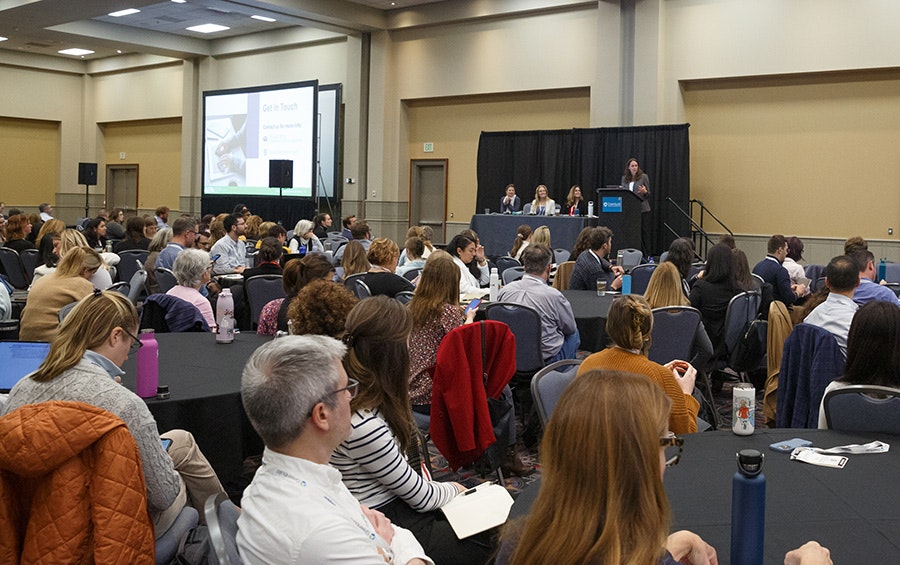
Greenbuild's Summit Working Group has programmed an in-depth session that will give attendees an inside look successful designs for resilient buildings. This all-day Summit will give attendees the chance to dive into real-world applications and how building for resilience can save money and benefit building projects.
Continuing education credits are available for Greenbuild's in-person summits.
Who will you hear from?
Our summit speakers bring their expertise, specialized knowledge and experience to the room for a focused learning experience like no other.
With CEOs, CIOs, Presidents, Vice Presidents, Partners and various other sustainability leaders taking to the stage, you couldn't be in better company.
Who will you meet?
Greenbuild features a cutting-edge community of global green building professionals looking to improve sustainability, resilience, equity, health and wellness in the spaces we live, work, play and learn. Take a look at who you'll meet at a Greenbuild summit.
Summit learning objectives
- Attendees will be able to identify and articulate the main factors driving climate resilience across cities, communities and businesses globally.
- Attendees will learn how the expectations for professional practice are shifting as physical climate risk management becomes a central priority.
- Attendees will have a better view of the landscape of resilience frameworks and tools and a greater understanding of how to leverage these tools in professional practice.
- Attendees will explore U.S. and international building projects that successfully integrate decarbonization and resilience, offering replicable lessons for future projects.
Secure your spot
Greenbuild's Summits offer a technical, hands-on course where you can work directly with experts and peers on critical topics impacting our industry.
Summits included in Conference and Student Passes
Summit Working Group members
The Greenbuild Summit Working Group consists of green building experts that advises our conference and program team on all aspects of our 2026 Summits, ensuring Greenbuild is at the forefront of the industry.
- Susanne Desroches, Senior Vice President, Clean and Resilient Buildings, NYSERDA
- Ilana Judah, Americas Climate Sustainability Leader, Arup
- Marissa Aho, Former Chief Resilience Officer, City of Houston, and City of Los Angeles
- Rebecca Laberenne, Principal, Climate Risk and Resilience, USGBC


Summit sponsorship available
Guarantee that the green building industry identifies you as a partner by sponsoring one of Greenbuild's Summits or Workshops taking place Tuesday, October 20, 2026, at the Javits Center in New York City.
Eric Peterson
Sponsorship Opportunities
202.256.0939
eric.peterson@informa.com